The 2026 Landscape: How AI is Reshaping Lean Startups
The AI tool ecosystem in 2026 has matured into a layered stack. At the foundation sit the major AI labs—OpenAI, Anthropic, Google, and Microsoft—whose frontier models power a growing ecosystem of specialized, billion-dollar startups built on top of them 124. The defining shift from 2024-2025 has been the emergence of agentic tools: AI that doesn't just generate content or code, but actively executes multi-step workflows, debugs its own outputs, and learns from context 313. For startup founders, this means a single founder or a tiny team can now do the work that once required a full engineering, marketing, and design department.
A critical trend is the divergence on AI safety as a strategic differentiator. Anthropic has refused to release its most advanced model, "Mythos," which it claims is too powerful for public use, and declined a Pentagon contract that OpenAI ultimately signed 91011. This matters to founders: tools built on Claude 5 are designed with constitutional AI safety, while OpenAI-powered tools may be less constrained but more widely available.
Pricing is also shifting. Usage-based billing is becoming the norm—GitHub Copilot announced it would move entirely to usage-based pricing as of June 1, 2026 15. This benefits early-stage startups who pay only for what they consume, but requires careful monitoring as teams scale.
Below is the breakdown of the best tools in 2026 across Marketing, Coding, Research, and Design, followed by guidance on how to assemble them into an effective AI stack.
---
1. Marketing: AI Agents for Customer Acquisition and Content
Marketing remains the category with the widest selection of AI tools, and 2026 has seen a distinct shift from simple content generators to agentic marketing workflows that plan, execute, and optimize campaigns.
Content Generation and Copywriting
- Jasper AI continues to lead as the most mature AI marketing platform, now positioning itself as an "AI agent workspace for marketing" 29(https://www.jasper.ai/). Jasper's agents can draft blog posts, ad copy, email sequences, and social content while maintaining a consistent brand voice. It excels for growth-stage startups that need scalable content production and have the budget (pricing is not publicly listed in simple tiers, requiring a demo). The platform includes built-in analytics to measure content performance.
- Writesonic offers over 80 features for generating SEO-optimized content, articles, ad copy, and product descriptions 72(https://searchatlas.com/blog/writesonic-review/). It is an end-to-end content marketing platform covering planning, research, writing, editing, and optimization 73(https://marketplace.microsoft.com/en-us/product/web-apps/writesonic.writesonic-offer-2). However, reviews note that its pricing has become "confusing" in 2026, with its most valuable feature (GEO/GPT optimization) behind a paywall, and some user-reported trust issues 75(https://www.roborhythms.com/writesonic-review/)77(https://www.eesel.ai/blog/writesonic-ai-review). Writesonic is best for solo operators and bootstrapped founders who want a broad feature set at a moderate price point.
- Anyword is differentiated by its predictive performance scoring: it generates multiple ad variants and scores them based on predicted conversion rates before you spend a dollar 78(https://en.wikipedia.org/wiki/Anyword)79(https://somi.ai/products/anyword)80(https://www.scripted.com/ai/anyword-review-how-it-works-features-pricing-and-more). Used by over 1 million marketers including teams at Amazon, Greenhouse, and IBM, Anyword is ideal for startups spending heavily on paid acquisition (Google Ads, Meta Ads, LinkedIn Ads) who need data-driven copy optimization 81(https://www.g2.com/products/anyword/reviews). It is a paid tool with no free tier 84(https://toolradar.com/tools/anyword).
- Frase.io has evolved from a simple writing assistant into an "Agentic Content Intelligence Platform" that combines SERP research, on-page optimization, and GEO-focused improvements to rank in both traditional search engines and AI-generated answers (like ChatGPT and Perplexity) 87(https://www.youtube.com/c/FraseAI)92(https://simplifyaitools.com/blog/frase-review-2026-features-pricing-geo-performance/). Frase delivers automated brief generation, gap analysis, and semantic optimization 88(https://searchatlas.com/blog/frase-review/). For SEO-driven startups in 2026—where Google is no longer the only search channel—Frase is arguably the most future-proof tool.
SEO and Visibility
- Surfer SEO has repositioned itself as an "AI visibility platform" that helps brands get found in Google, ChatGPT, Perplexity, Gemini, and beyond 85(https://surferseo.com/). It combines content optimization, AI search tracking, and topical authority into one workflow. For founders who need to understand not just keyword rankings but overall brand presence across AI answer engines, Surfer is a 2026 essential.
Email and SMS Marketing
- Klaviyo remains the gold standard for ecommerce startups, connecting natively to Shopify, BigCommerce, and WooCommerce to send personalized emails and SMS based on purchase behavior 93(https://www.chasedimond.com/what-is-klaviyo-a-complete-guide-for-ecommerce-brands-2026)94(https://www.sender.net/reviews/klaviyo/). It is not a general-purpose tool—non-ecommerce startups should look elsewhere—but for DTC and retail founders, Klaviyo's AI-powered segmentation and predictive analytics are unmatched.
- Mailchimp provides a more general-purpose all-in-one solution combining email, SMS, marketing automation, and social media features 95(https://mailchimp.com/)96(https://mailchimp.com/pricing/marketing/)97(https://mailchimp.com/features/). It is better for non-ecommerce startups and early-stage companies that want one platform rather than multiple point solutions.
Social Media Management
- Buffer offers the best balance of simplicity, reliability, and AI features for startup teams. Its AI Assistant helps generate post ideas, write captions, and repurpose content across channels 61(https://buffer.com/)98(https://multilogin.com/blog/buffer-review/). Buffer has the best user interface of any social media scheduling tool and is the most reliable for Instagram publishing 100(https://efficient.app/apps/buffer). It offers a free tier, making it the best starting point for pre-revenue startups.
Marketing Tools at a Glance
---
2. Coding: The Era of AI-Native Development
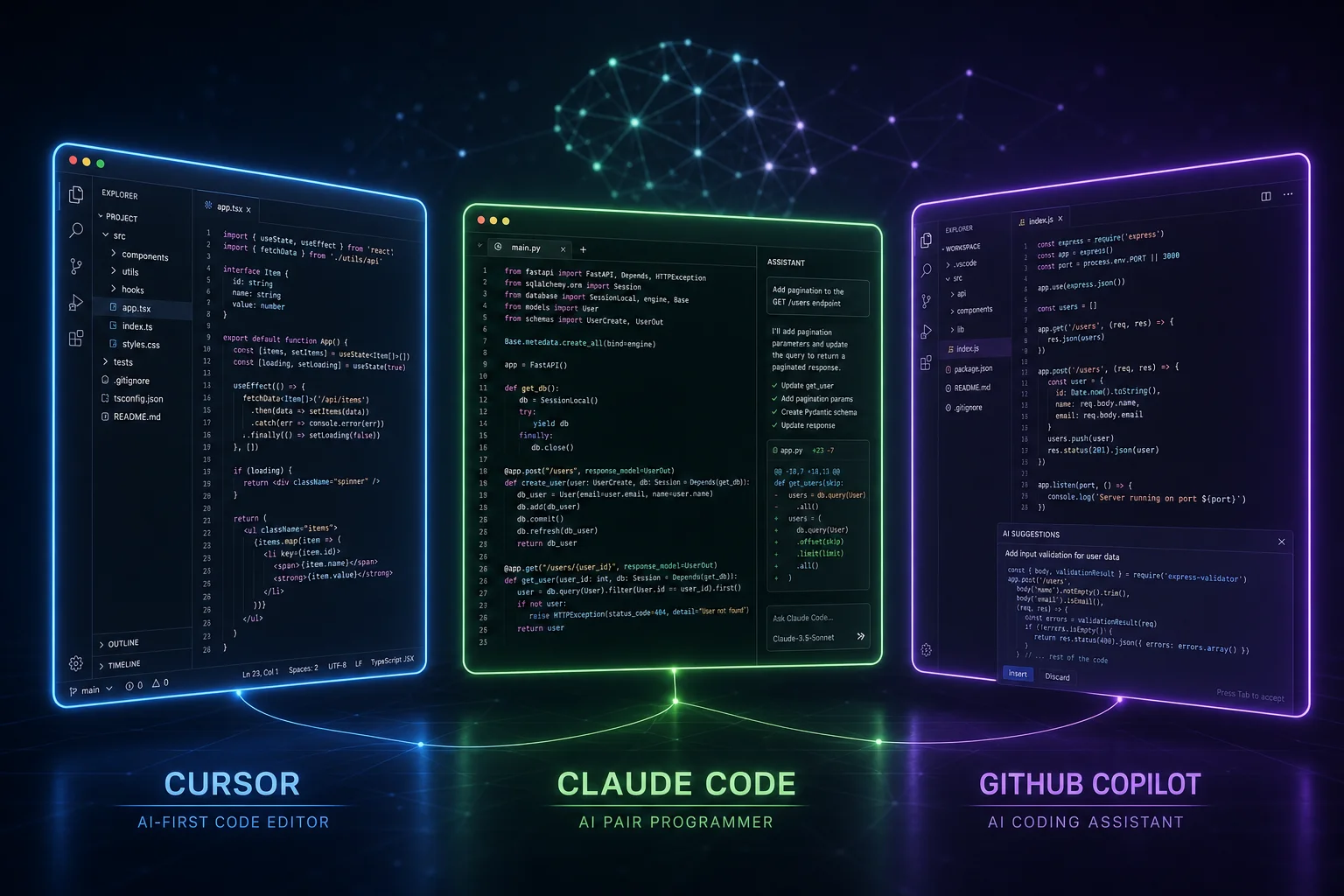
If one trend defines 2026 for technical founders, it is the agentic coding IDE. The old model of autocomplete suggestions has been replaced by tools that understand your entire codebase, propose multi-file changes, execute them, and even run tests to verify correctness.
The Top Tier: Agentic Coding IDEs
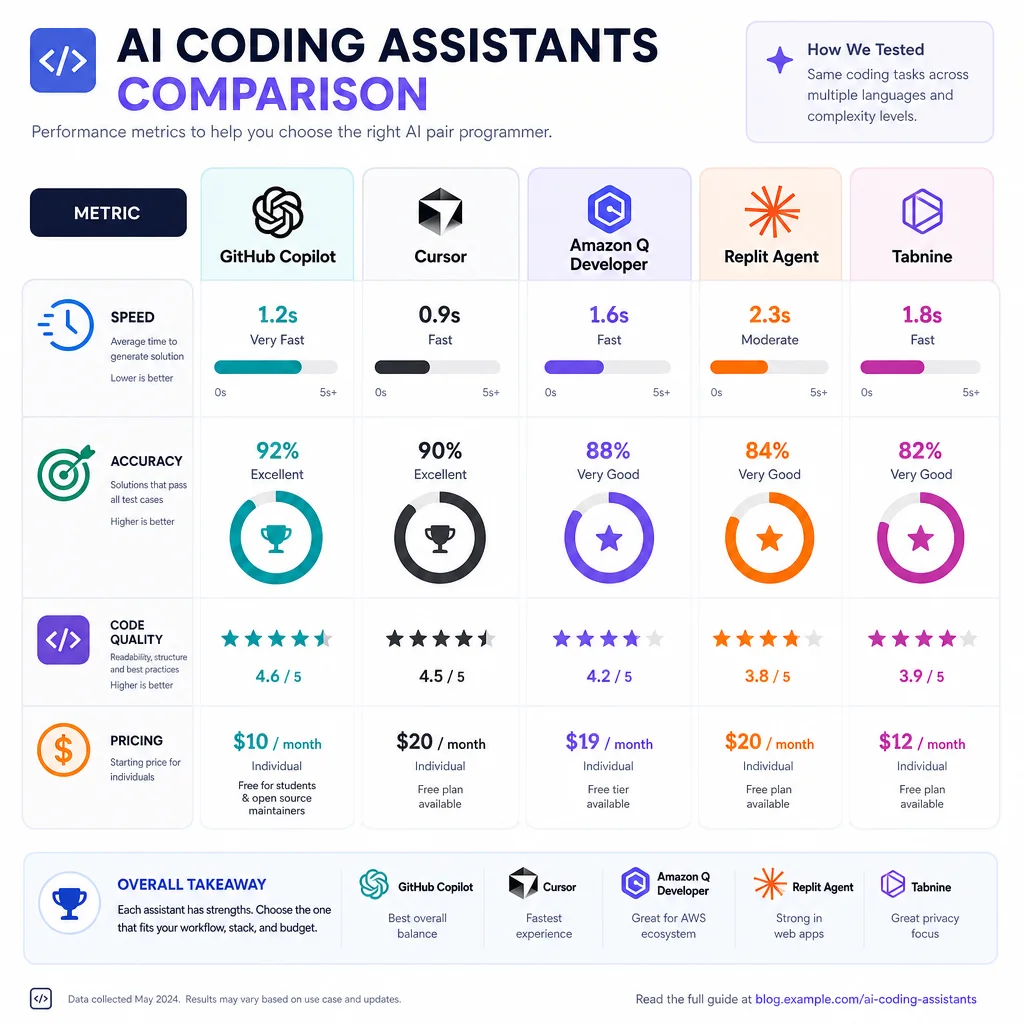
- Cursor is the most talked-about coding tool in 2026, and for good reason. Built by four MIT dropouts in their 20s who became billionaires by November 2025, Cursor is a dedicated IDE that allows engineers to use models from OpenAI, Anthropic, Google, and xAI to write, edit, and debug entire chunks of code 3(https://www.forbes.com/sites/rashishrivastava/2025/11/13/four-cofounders-of-popular-ai-coding-tool-cursor-are-now-billionaires/)36(https://cursor.com/). Its key advantage is context awareness: it understands your entire project, not just the file you have open. For startups, Cursor enables a single engineer to achieve the output of a much larger team. It is widely considered the best coding agent available 3(https://www.forbes.com/sites/rashishrivastava/2025/11/13/four-cofounders-of-popular-ai-coding-tool-cursor-are-now-billionaires/).
- Claude Code is Anthropic's entry into agentic coding, and early benchmarks in 2026 show it handling complex tasks with fewer errors than competitors. In a head-to-head test building the same app across Replit, Lovable, and Claude Code, Claude's version parsed a CSV file perfectly on the first attempt, while the others required follow-up prompts 16(https://www.xda-developers.com/tried-replit-lovable-and-claude-to-build-the-same-app/). Claude Code benefits from Anthropic's massive context window and deep reasoning capabilities, making it ideal for complex codebases and analytical programming tasks 6(https://claude.com/)40(https://claude.com/product/overview). The broader Claude ecosystem also includes Claude for Excel (available on the Microsoft Marketplace), which can read multi-tab workbooks, explain calculations with cell-level citations, and safely update assumptions 14(https://marketplace.microsoft.com/en-us/product/saas/wa200009404).
- GitHub Copilot remains the default for developers already in the GitHub ecosystem. As of June 1, 2026, Copilot transitioned to usage-based billing—every plan includes a base amount of requests, and customers pay only for what they use beyond that 15(https://github.blog/news-insights/company-news/github-copilot-is-moving-to-usage-based-billing/). This is a win for early startups with light usage but requires monitoring as the team grows and generation volume increases 37(https://learn.microsoft.com/en-us/training/github/).
No-Code and Natural Language App Builders
For non-technical founders or those building MVPs, the no-code AI builder category has exploded:
- Lovable allows anyone to build custom web applications, internal tools, and websites by simply chatting with an AI 19(https://lovable-dev.ai/)20(https://lovable.click/). Its models from OpenAI, Google, and Anthropic power the generation. Two of Lovable's cofounders became billionaires in December 2025 43(https://www.forbes.com/sites/aliciapark/2025/12/19/ai-startup-lovable-just-minted-one-of-europes-youngest-ever-self-made-billionaires/). It is best for non-technical founders who need functional web apps but don't want to write code.
- Bolt.new integrates frontier coding agents from multiple AI labs directly inside a visual interface, handling the heavy lifting of building websites, apps, and prototypes 21(https://bolt.new/). It is positioned as a faster path from idea to working software.
- Replit continues to evolve as a browser-based IDE used by millions of developers worldwide 17(https://promo-replit.com/free-plan/)18(https://www.wearefounders.uk/what-is-replit-the-complete-beginners-guide-to-online-coding/). It offers a free plan and supports a wide range of programming languages 41(https://en.wikipedia.org/wiki/Replit)42(https://www.rapidevelopers.com/blog/what-is-replit-a-beginners-guide). Replit is best for founders who want a cloud coding environment that requires no setup, with the ability to collaborate in real-time.
- v0 by Vercel is the go-to for frontend-heavy projects. It generates React components and UI layouts from text prompts 22(https://aifordevelopers.org/tool/v0-dev)47(https://www.mindstudio.ai/blog/what-is-vercel-v0). It won a 2025 Webby Award for developer tools 48(https://en.wikipedia.org/wiki/Vercel). The major limitation is that v0 is "stunning frontend, no backend or auth"—it creates beautiful UI but lacks backend capabilities 49(https://www.taskade.com/blog/v0-review). It also integrates with Vercel's security incident in April 2026, when a single misconfigured OAuth token led to a data breach, so founders should be aware of security hygiene when using Vercel-connected tools 26(https://www.bleepingcomputer.com/news/security/vercel-confirms-breach-as-hackers-claim-to-be-selling-stolen-data/)27(https://devops-daily.com/posts/vercel-april-2026-security-incident)28(https://cybernews.com/security/vercel-hacked-after-oauth-compromise/).
- Codeium remains the best free alternative to GitHub Copilot, offering unlimited code completions, in-IDE chat, and support for 70+ languages. It is free forever for individuals, making it the ideal starting point for bootstrapped founders 45(https://freeapihub.com/ai-tools/codeium)46(https://aiwiki.ai/wiki/codeium).
Documentation and Knowledge
- Swimm uses AI to analyze pull requests and automatically generate documentation that tells a cohesive story of code changes 50(https://www.linkedin.com/company/swimm-io)51(https://swimm.ai/). For startups with a growing codebase and limited documentation culture, Swimm prevents technical debt.
Coding Tools at a Glance
---
3. Research: AI-Powered Market Intelligence
Startup founders in 2026 have access to AI tools that can conduct hours of human research in minutes. The key is knowing which tool to use for which kind of research.
AI Research and Synthesis
- Perplexity AI Pro has emerged as the essential research companion for founders. Unlike traditional search, Perplexity provides synthesized, cited answers drawn from multiple sources. Its Pro mode ($20/month) unlocks unlimited searches, file uploads, and multiple search modes (including academic, video, and social). For competitive analysis, market sizing, and customer discovery, Perplexity is faster than any manual research process 32(https://www.pcmag.com/explainers/is-perplexity-better-than-google-search-i-switched-for-a-week-to-find-out).
- ChatGPT Deep Research (available via OpenAI) is a dedicated mode that browses the web, reads documents, and produces structured research reports on complex questions. It is available on ChatGPT Pro ($200/month) and, as of late 2025, on ChatGPT Plus for limited queries. For deep-dive analysis—such as "build a competitive landscape for the AI powered SMB accounting market"—ChatGPT Deep Research produces ten-page reports with citations that would take a human analyst a full day.
- Google Gemini Deep Research offers similar capabilities integrated into Google Workspace, with the advantage of being able to analyze your Google Drive files, emails, and calendar data alongside web research. For founders already in the Google ecosystem, this reduces context switching.
Competitive Intelligence
- Similarweb provides AI-powered website traffic analytics, audience insights, and competitive benchmarking. For pre-revenue startups validating market demand or tracking competitor growth, Similarweb's free tier offers enough data for basic analysis. The paid tiers unlock deeper segmentation and industry benchmarks.
- Crayon offers enterprise-grade competitive intelligence but its pricing is aimed at mid-market and enterprise teams. For most early-stage startups, combining Perplexity (for qualitative research) with Similarweb (for quantitative data) is more cost-effective.
- SparkToro specializes in audience intelligence: it finds where your target customers hang out online, what they read, and who influences them. For content marketing and acquisition strategy, SparkToro is invaluable.
Research Tools at a Glance
---
4. Design: Professional Output Without Designers
The design tool landscape in 2026 is defined by the tension between ease of use and output quality. The best tool depends entirely on what you're trying to create.
Visual Content and Social Graphics
- Canva Magic Studio is the default for non-designer founders who need to produce everything from social media graphics and presentations to logos and short videos. The AI suite includes text-to-image generation, Magic Write (copywriting assistant), Magic Design (AI layout generator), and background removal 102(https://www.canva.com/)103(https://apps.microsoft.com/detail/xp8k17rnmm8mtn). Canva operates on a freemium model with a generous free tier, making it the lowest-risk starting point for pre-revenue startups.
Presentations and Pitch Decks
- Gamma is the fastest way to go from a topic to a complete, beautifully designed presentation. It generates AI slides, pitch decks, and documents from a single prompt and exports to PowerPoint, PDF, or Google Slides 30(https://gamma.app/)31(http://gamma-app.ai/)107(https://gamma.com.ai/). For founders who need to produce investor decks rapidly—and iterate based on feedback—Gamma's speed is unmatched.
- Beautiful.ai offers a different philosophy: an AI-driven template system that enforces design consistency as you build slides in real-time. It provides a free 14-day trial 108(https://www.beautiful.ai/). While slower than Gamma for generating a full deck from scratch, Beautiful.ai produces more polished, client-ready outputs for founders who want to control the narrative while the AI handles layout.
UI/UX Design and Prototyping
- Uizard is the most accessible AI-powered UI design tool for non-designers. It offers a free plan and paid plans starting at $12/month 110(https://www.theaihunter.com/t/uizard/)112(https://toolradar.com/tools/uizard)113(https://www.youtube.com/@uizardio). Users can generate wireframes, mockups, and prototypes from text prompts or by uploading screenshots. Its learning curve is minimal, making it ideal for founders who need to quickly prototype app interfaces before hiring a designer 111(https://uxpilot.ai/blogs/uizard-io). The trade-off: outputs can feel generic and the AI sometimes misinterprets prompts, so Uizard is best for wireframing and early-stage prototyping rather than production UI 114(https://www.toools.design/blog-posts/best-ai-tools-ui-ux-designers-2026).
- Galileo AI (when accessible) offers higher-fidelity UI generation from text prompts but was harder to find specific 2026 pricing in research, as web queries returned content about the astronomer Galileo instead of the tool 109(https://www.britannica.com/biography/Galileo-Galilei). For founders who need production-quality app and web mockups, Galileo AI is worth investigating.
Image Generation
- DALL-E 3 via ChatGPT is the easiest image generation tool for non-designers because it integrates directly into the ChatGPT interface, allowing conversational prompt refinement without learning prompt engineering syntax 117(https://en.m.wikipedia.org/wiki/DALL-E)118(https://openai.com/index/dall-e-3/)119(https://m.youtube.com/watch). For founders already paying for ChatGPT Plus ($20/month), DALL-E 3 is included at no extra cost.
- Midjourney produces the highest quality, most artistic images, but requires learning to use it through Discord and mastering prompt engineering 115(https://www.britannica.com/technology/Midjourney)116(https://www.youtube.com/watch). For startups where brand imagery is a critical differentiator (e.g., a game studio, a fashion brand), the investment in learning Midjourney pays off. For everyone else, DALL-E 3 is sufficient.
- Adobe Firefly is the best choice for founders already in the Adobe Creative Cloud ecosystem, offering generative AI capabilities that integrate with Photoshop, Illustrator, and Express 121(https://www.adobe.com/)122(https://adobe-creative-cloud.en.softonic.com/). Its enterprise-grade controls make it suitable for regulated industries.
Branding and Logo Creation
- Looka is the leading AI logo maker, having served over 20 million businesses 125(https://www.honestbrandreviews.com/reviews/looka-review/). You input your business name and industry preferences, and the AI generates hundreds of logo concepts 126(https://easywithai.com/free-ai-logo-generators/looka/). Full logo packages range from approximately $20 to $129 per year and include vector files, brand guidelines, and social media kit assets 128(https://similarlabs.com/blog/looka-review). For founders who need quick, affordable branding without hiring a designer, Looka is the best option.
- Brandmark offers a more distinctive, custom-feeling logo design process using generative AI icons and hand-crafted fonts 129(https://brandmark.io/)130(https://easywithai.com/ai-marketing-tools/brandmark/)131(https://www.aitoolsspace.com/en/tools/brandmark). It is best for founders who want their brand to feel less template-based than Looka outputs can sometimes appear.
Design Tools at a Glance
---
5. Integrative Platforms and Recommended AI Stacks
The most important strategic decision for a startup founder in 2026 is whether to consolidate around an all-in-one AI platform or build a modular AI stack of specialized tools.
Option A: Consolidating Around an All-in-One Platform
- Google Gemini + Google Workspace embeds AI directly into Gmail, Docs, Sheets, Slides, and Meet. For founders already living in Google's ecosystem, Gemini provides drafting, analysis, summarization, and content generation without switching contexts. It is the most seamless productivity integration available.
- Microsoft Copilot for Microsoft 365 does the same for the Microsoft ecosystem—Word, Excel, PowerPoint, Outlook, and Teams—with the added benefit of accessing Microsoft Graph data (your emails, calendar, chat history, and documents) for deeply contextual AI responses 59(https://support.microsoft.com/en-us). For enterprise-oriented startups or founders who prefer Microsoft tools, Copilot is the strongest all-in-one option.
- Notion AI combines note-taking, task management, databases, and AI writing/analysis in a single workspace 33(https://thebusinessdive.com/notion-review)34(https://thenotionbase.com/how-to-use-notion). Notion AI can generate text, summarize notes, translate content, and answer questions from your database. It is ideal for early-stage startups that want to consolidate project management, documentation, and knowledge management into one tool with AI assistance.
- Zapier Central AI serves as the "AI orchestration layer" that connects 9,000+ apps and allows you to build AI agents that understand natural language instructions and execute multi-step workflows across your tools 56(https://zapier.com/)57(https://startupowl.com/reviews/zapier). For founders who want to automate cross-tool workflows (e.g., "when a new lead fills out our Typeform, research their company with Perplexity, draft a personalized email with Jasper, add them to HubSpot, and create a task in Asana"), Zapier is the bridge that ties everything together 52(https://cybernews.com/ai-tools/zapier-review/)53(https://dorik.com/blog/what-is-zapier)54(https://www.jasper.ai/blog/how-to-use-zapier)55(https://marketplace.microsoft.com/en-us/product/office/WA200002044).
Option B: The Modular AI Stack (Recommended for Most Startups)
No single all-in-one platform excels across marketing, coding, research, and design. For most founders, the optimal approach in 2026 is a curated modular stack connected by automation tools like Zapier. Here is the recommended stack for a lean startup team, by stage:
Pre-Seed / Bootstrapped (Budget: $0–100/month total)
Seed Stage (Budget: $100–400/month total)
Series A / Growth Stage (Budget: $500–2,000/month total)
Key Integration Principles
1. Use Zapier as your central nervous system to connect your tools and create automated workflows that pass data between them 5657.
2. Choose one primary AI assistant (Claude 5 or ChatGPT) for general reasoning, analysis, and brainstorming, and layer specialized tools on top of it for domain-specific tasks. Claude 5 is widely considered the most advanced AI assistant in 2026 for deep analytical work 12.
3. Keep your knowledge base in one place—Notion is the best option for most startups—so that your AI tools can reference a single source of truth for company data, product specs, and brand guidelines 3334.
4. Evaluate tools based on integration depth, not just standalone features. A great tool that connects poorly with your stack will create friction. Prioritize tools with strong APIs and Zapier support.
5. Budget for experimentation: set aside 10-15% of your AI tool budget for trying new tools each quarter. The pace of innovation in 2026 means that a better option for any given category may emerge within months.
---
Conclusion: The 2026 Founder's AI Mindset
The single most important takeaway for startup founders in 2026 is that AI tools are now a competitive necessity, not an optional efficiency gain. A solo founder with the right AI stack—Cursor for coding, Perplexity for research, Gamma for pitches, Canva for design, and Zapier connecting everything—can execute at a level that would have required a team of five to ten people just two years ago.
The key is to resist the temptation of tool sprawl. Start with the minimum viable stack for your stage (see the pre-seed recommendation above), add specialized tools only as specific bottlenecks emerge, and ruthlessly cut any tool that isn't actively saving you time or improving output quality. Use the modular stack approach for its flexibility and specialization, but invest in integration through automation platforms like Zapier to prevent data fragmentation 5657.
The best AI tool is the one you actually use every day. Build your stack around your highest-leverage activities, and let AI handle the rest.