The Developer AI Tool Stack in 2026: A Comprehensive Guide
The landscape of AI-powered developer tooling has matured dramatically by 2026, evolving from simple code completion copilots into autonomous, multi-agent platforms that span the entire software development lifecycle. Four categories stand out as the most impactful: AI coding assistants, AI testing tools, AI documentation systems, and AI-powered monitoring/observability platforms. Below is a thorough examination of the best tools in each category, how they compare, and the emerging trends reshaping how software is built, tested, documented, and operated.
---
1. AI Coding Assistants: From Autocomplete to Autonomous Agents
The coding assistant market has undergone a fundamental transformation. Where 2023 featured autocomplete plugins, 2026 is defined by AI-native IDEs and autonomous coding agents capable of completing entire features from a single prompt.
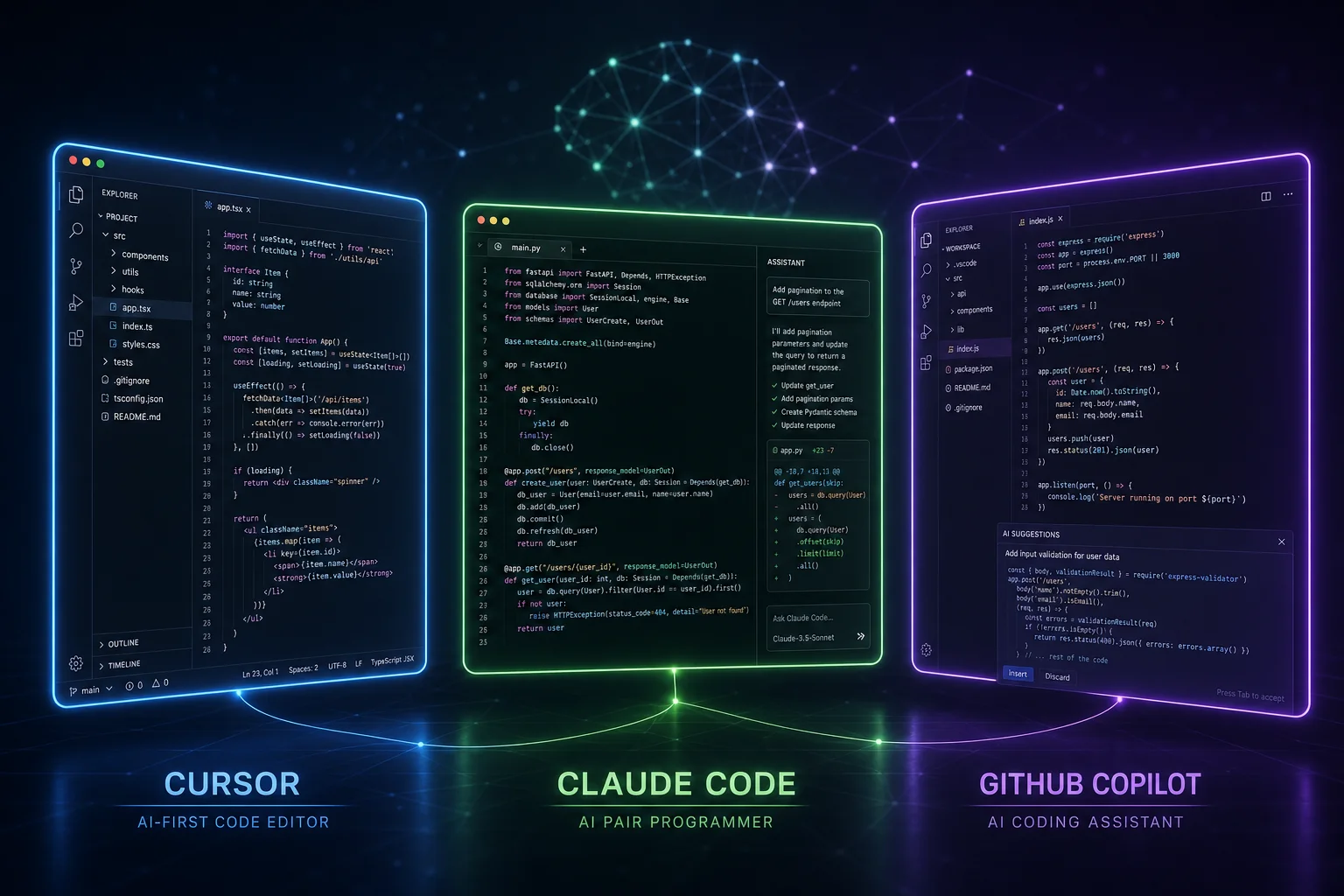
Cursor (Anysphere) — The Dominant AI-Native IDE
Cursor has emerged as the clear market leader and the most popular AI-first coding environment 77). Developed by Anysphere—founded by four MIT dropouts in 2022—Cursor reached $100 million in annual recurring revenue in its first 12 months, described as the fastest ARR ramp in history 7879. By April 2026, Anysphere was in talks to raise up to $5 billion at a valuation of $60 billion, with projected revenue of approximately $2 billion 8181.
Key differentiators:
- Multi-model support — Cursor allows engineers to use AI models from multiple providers including OpenAI, Anthropic, Google, and xAI, enabling flexible model selection for different tasks 6(https://www.forbes.com/sites/rashishrivastava/2025/11/13/four-cofounders-of-popular-ai-coding-tool-cursor-are-now-billionaires/)
- Deep context awareness — understands entire codebases, not just the open file, enabling contextually relevant suggestions across large projects
- Agentic workflows — Cursor functions as both a coding agent and a full development environment, capable of writing, editing, debugging, and refactoring code autonomously 77(https://en.wikipedia.org/wiki/Cursor_(company))
- Enterprise adoption — used by Nvidia, Adobe, Uber, and over 50,000 enterprise teams 6(https://www.forbes.com/sites/rashishrivastava/2025/11/13/four-cofounders-of-popular-ai-coding-tool-cursor-are-now-billionaires/)
- Named to the TIME100 Most Influential Companies list in 2025 82(https://time.com/collections/time100-companies-2025/7289581/anysphere/)
Cursor's rise has been so rapid that TIME noted "even among AI startup unicorns, Anysphere stands out for its rocket-like ascent" and observed that "coding might be the first industry already being widely outsourced to AI" 82.
Windsurf (formerly Codeium) — The Best Free Alternative
Codeium rebranded to Windsurf in late 2024, transforming from a simple code completion plugin into a full AI-native IDE with agentic capabilities 77. Windsurf positions itself as "the world's most advanced AI coding assistant for developers and enterprises" and is built to keep developers in flow by understanding intent and handling complex codebases 8.
Key differentiators:
- Free forever for individuals with unlimited code completions — the most generous free tier in the market 10(https://freeapihub.com/ai-tools/codeium)10(https://freeapihub.com/ai-tools/codeium)
- Support for over 70 programming languages with plugins for VS Code and 40+ other IDEs 9(https://marketplace.visualstudio.com/items)97(https://somi.ai/products/codeium)
- Combines intelligent code completions with agentic workflows inside an AI-powered code editor 7(https://www.ai-tools-hub.com/tools/code-assistants/codeium)
- Includes an autonomous cloud offering called Devin 8(https://windsurf.com/) — note this is distinct from Cognition AI's Devin product
- Excellent for developers who want a powerful AI assistant without a subscription cost
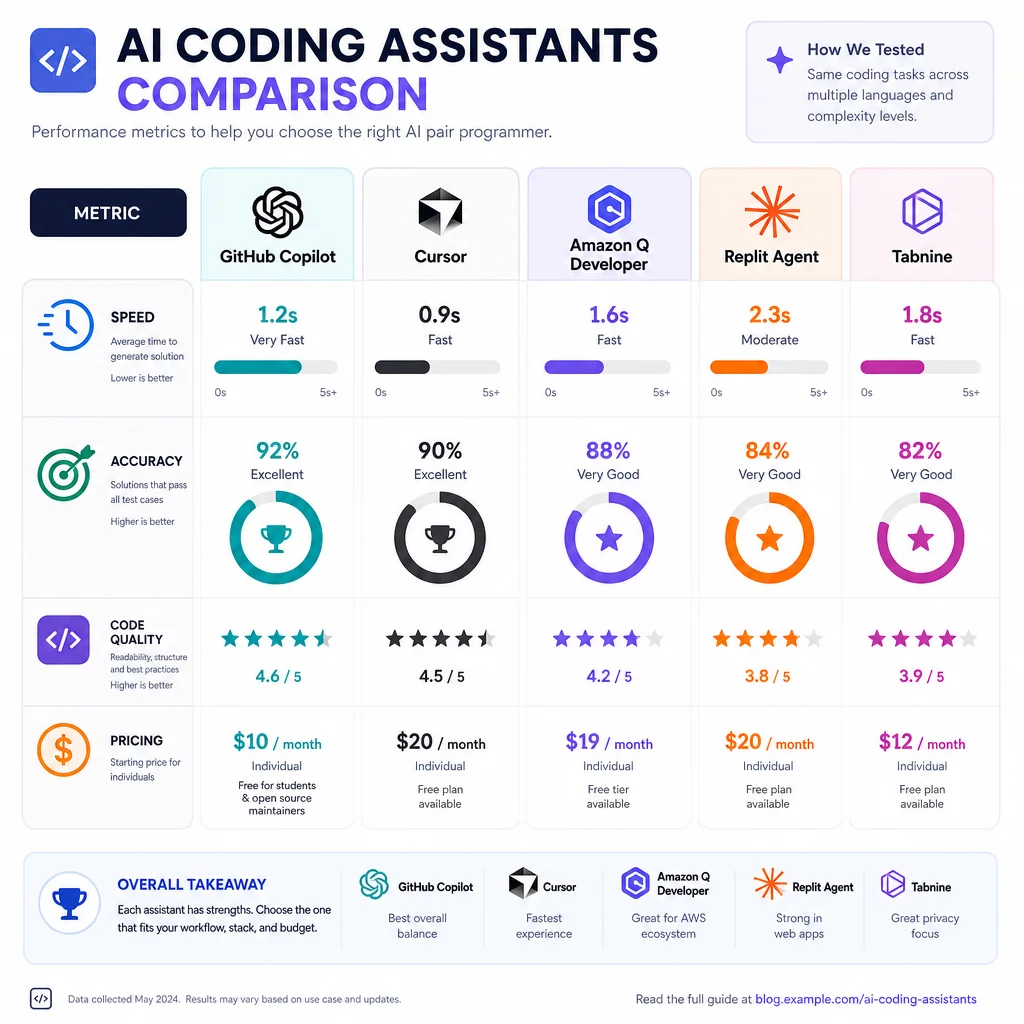
GitHub Copilot — The Platform Play
GitHub Copilot remains a major force, deeply integrated into the GitHub ecosystem which hosts over 100 million repositories 15454. In a landmark move announced in April 2026, Copilot is transitioning all plans to usage-based billing effective June 1, 2026, abandoning the previous per-user, per-month flat-rate model 5353535353. This shift reflects the maturation of the market toward consumption-based pricing that aligns costs with actual value delivered.
Key differentiators:
- Deepest integration with GitHub — pull requests, issues, Actions, and Codespaces all work natively with Copilot
- The GitHub Foundations certification covers AI-assisted development workflows 2(https://learn.microsoft.com/en-us/credentials/certifications/github-foundations/)
- As a Microsoft subsidiary, it offers enterprise-grade compliance and Azure ecosystem integration
- Moving to usage-based billing will fundamentally change organizational cost structures 53(https://github.blog/news-insights/company-news/github-copilot-is-moving-to-usage-based-billing/)
Tabnine — The Enterprise Privacy Champion
Tabnine has carved out the strongest position for organizations where code privacy, security, and compliance are paramount. Tabnine is "the AI code assistant that accelerates and simplifies software development while keeping your code private, secure, and compliant" 17.
Key differentiators:
- Zero-data-retention policies, SOC2/GDPR compliance 23(https://weavai.app/blog/en/2026/04/27/tabnine-2026-review-enterprise-ai-code-review-agent/)
- Learns from a team's unique codebase, coding conventions, and individual developer patterns 19(https://www.eesel.ai/blog/tabnine-overview)20(https://www.smart-tools.ai/en/product/Tabnine)
- Award-winning Code Review Agent feature 23(https://weavai.app/blog/en/2026/04/27/tabnine-2026-review-enterprise-ai-code-review-agent/)
- Self-hosted deployment options for air-gapped environments 22(https://devtoolsreview.com/pricing/tabnine-pricing/)
- Pricing starts at $39/month for enterprise-focused plans 23(https://weavai.app/blog/en/2026/04/27/tabnine-2026-review-enterprise-ai-code-review-agent/)
- Supports Visual Studio 17.4+ and extensions for multiple IDEs 9(https://marketplace.visualstudio.com/items)
JetBrains Air — The Multi-Agent Environment
JetBrains, whose tools are used by 11.4 million developers globally, introduced Air as an agentic development environment that lets developers delegate coding tasks to multiple AI agents and run them concurrently 99100. Air supports integration with multiple coding agents including Codex and Claude, reflecting the trend toward composable, multi-model stacks 100.
Cline — The Open-Source Disruptor
Cline has grown to 8 million developers as a free, open-source AI coding agent with Plan/Act modes, MCP integration, and terminal-first workflows 105. It runs as an extension inside VS Code and other editors, giving developers a conversational AI that can write code, edit files, run commands, and use a browser autonomously 9106. Users bring their own API keys, making it cost-flexible and supporting 30+ LLMs 108107.
Poolside — Foundation Models for Coding
Poolside, a San Francisco-based startup founded in 2023, focuses on foundation models purpose-built for software development. Despite the collapse of its ambitious $4 billion "Project Horizon" compute infrastructure initiative in Texas, the company continues to ship product 95. In April 2026, Poolside launched "Laguna XS 2," a free, high-performing open model designed for local agentic coding, allowing developers to run AI coding agents on their own hardware without cloud dependencies 96.
---
2. AI-Powered Testing Tools: Self-Healing, Autonomous Quality Assurance
The testing landscape in 2026 is defined by AI-driven self-healing, autonomous test generation, and visual AI. As AI coding agents accelerate the pace of code production, testing tools must match that velocity to maintain quality 31.
Mabl — The Agentic Testing Platform
Mabl has positioned itself as the leading AI-native testing platform, describing itself as "the agentic testing platform that gives you coverage that builds itself, runs itself, and recovers itself" 31. Founded in 2016, Mabl is a low-code solution that eliminates the need for testers to write scripts 32.
Key capabilities:
- AI-driven self-healing — automatically identifies test steps that fail due to UI changes and updates selectors without manual intervention 34(https://makerstack.co/reviews/mabl-review/)
- Automatic test case generation — AI generates test cases, identifies regressions, and suggests improvements 33(https://moge.ai/product/mabl)
- Built-in accessibility testing — identifies screen reader, color contrast, and keyboard navigation issues 35(https://itrexgroup.com/blog/what-is-mabl/)
- Native CI/CD integration with Jenkins, CircleCI, GitHub Actions 36(https://www.frugaltesting.com/blog/mabl-a-complete-guide-to-ai-powered-test-automation)
- Parallel execution, cross-browser testing, and geo-location testing 36(https://www.frugaltesting.com/blog/mabl-a-complete-guide-to-ai-powered-test-automation)
- Free tier for small teams, paid plans for teams and enterprises 34(https://makerstack.co/reviews/mabl-review/)
Mabl is described as "a credible choice for teams ready to move beyond brittle Selenium scripts but who do not have the headcount to build and run their own framework" 34.
Applitools — Visual AI Gold Standard
Applitools combines proprietary Visual AI with GenAI and no-code approaches to maximize test coverage while automating maintenance 37. Its core technology applies human-like judgment to detect visual differences and layout issues that traditional functional testing would miss 38.
Key capabilities:
- Pixel-level UI discrepancy detection across browsers, devices, and screen sizes 39(https://testautomationtools.dev/applitools-testing-tool-overview-advantages-and-disadvantages/)
- Integration with Selenium, Cypress, WebDriverIO, Appium, and all major testing frameworks 40(https://www.testingtools.ai/tools/applitools/)
- Applitools Autonomous — an AI-powered e2e testing product that combines functional, visual, and API testing for teams of all skill levels 41(https://www.youtube.com/@Applitools)
- CI/CD integration with Jenkins, CircleCI, GitHub Actions 40(https://www.testingtools.ai/tools/applitools/)
- Free tier, Team plan, and Enterprise custom pricing 43(https://aichief.com/ai-development-tools/applitools/)
- Highest user ratings on G2 and Software Advice in the visual testing category 44(https://www.softwareadvice.com/app-development/applitools-profile/reviews/)45(https://www.g2.com/products/applitools/reviews)
Tricentis Testim — Enterprise AI Test Automation
Tricentis Testim is an AI-powered platform focused on creating and maintaining automated tests for web applications 25. Recognized as a leader by all major industry analysts including Forrester, Tricentis serves Global 2000 companies 2627.
Key capabilities:
- Smart Locators and self-healing capabilities using AI to automatically update element selectors when UI changes 25(https://en.wikipedia.org/wiki/Tricentis)
- Tricentis AI Workspace described as an agentic SDLC enabler that orchestrates autonomous testing and developer agents 28(https://www.tricentis.com/)
- End-to-end, integration, and functional testing support
- SAP Test Automation integration for enterprise DevOps 29(https://www.sap.com/products/technology-platform/test-automation.html)
- Custom enterprise pricing
Diffblue Cover — AI Unit Test Generation
Diffblue Cover specializes in automatically generating human-readable unit tests for Java code using reinforcement learning and deep learning 46. It integrates with IntelliJ IDEA, Maven, Gradle, and CI/CD pipelines.
Key capabilities:
- Analyzes code and produces unit tests covering branches, edge cases, and regressions 46(https://www.positioniseverything.net/how-to-see-all-bing-related-searches/)
- Community Edition for individual developers; Enterprise plans require contacting sales
- Automatically generates and maintains unit tests as code changes
Broader Testing Ecosystem
Additional notable AI testing tools include: Functionize (NLP-based test creation in plain English), Test.ai (AI/computer vision for mobile app testing), Sauce Labs (cloud-based testing with integrated AI visual capabilities), and Perfecto by Perforce (AI-powered continuous testing with self-healing) 46. All major platforms share core AI capabilities: self-healing scripts, automated test generation, visual AI regression detection, and deep CI/CD integration 363934.
---
3. AI Documentation Tools: Autonomous Knowledge Management
Documentation has long been a pain point for developers. In 2026, AI tools are addressing this by auto-generating documentation from code, maintaining knowledge bases autonomously, and providing AI-powered code explanation on demand.
Notion AI — The Autonomous Knowledge Workspace
Notion has evolved from a note-taking app into a comprehensive AI workspace that combines writing, planning, knowledge centralization, and project management with AI capabilities 505050. The standout development in 2026 is Notion AI Agents — autonomous systems that work 24/7 to capture knowledge, answer questions, and push projects forward 49494949.
Key capabilities:
- AI-powered knowledge capture — automatically documents decisions, discussions, and project context 50(https://apps.microsoft.com/detail/xpdbvss44r0l9h)
- Question answering — AI finds answers across the entire knowledge base instantly 50(https://apps.microsoft.com/detail/xpdbvss44r0l9h)
- Task automation — agents handle routine documentation maintenance 49(https://www.notion.com/)
- Centralized repository — one place for all documentation, integrated with development workflows 51(https://www.notion.so/login)
- Freemium pricing with paid tiers for advanced AI features
Notion AI Agents represent a significant leap — they proactively maintain knowledge bases rather than simply responding to queries, reducing the manual burden on developers 49.
Swimm — Enterprise Codebase Documentation
Swimm focuses specifically on helping enterprise developers understand big, complex codebases and seamlessly captures knowledge to fill documentation gaps 47474747. Its core value proposition is eliminating the need for developers to write in-depth explanations by generating code snippet explanations automatically 484848.
Key capabilities:
- Auto-generates explanations of code snippets to fill knowledge gaps 48(https://swimm.ai/)
- Targets large organizations with complex codebases and onboarding challenges 47(https://www.linkedin.com/company/swimm-io)
- IDE or repository-level integration for enterprise developers 47(https://www.linkedin.com/company/swimm-io)
- Enterprise-focused pricing (per-seat or per-organization)
GitHub Copilot for Documentation
GitHub Copilot's transition to usage-based billing in June 2026 5353535353 has implications for documentation workflows. Within the GitHub ecosystem, Copilot can generate README files, commit messages, pull request descriptions, and inline code documentation. Its deep integration with GitHub — "the complete AI-powered developer platform" 111 — makes documentation generation a seamless part of the development workflow.
Mintlify
Mintlify is noted as a documentation generation tool in this space, though it did not have substantial web search presence in the available research results, suggesting either a shift in its web presence or a smaller market footprint relative to the other tools.
---
4. AI Monitoring & Observability: Self-Driving Operations
AI has transformed observability from passive dashboards into proactive, self-diagnosing systems. The 2026 landscape is defined by AI that doesn't just surface data — it identifies root causes, predicts incidents, and autonomously remediates issues.
Datadog — The AI Infrastructure Powerhouse
Datadog's stock soared 31% on May 7, 2026, as analysts identified AI winners in software, noting that OpenAI is its biggest customer and that Datadog provides the cloud infrastructure that AI models from OpenAI and Anthropic run on 6767. Datadog brings together metrics, traces, and logs in one unified platform 69.
Key AI capabilities:
- Watchdog — AI-powered anomaly detection that automatically identifies unusual patterns in metrics, traces, and logs without manual threshold setting
- Bits AI — natural language interface for querying observability data and getting proactive insights
- LLM Observability — specialized monitoring for large language model applications, tracking token usage, latency, prompt quality, and model behavior
- Automated root cause analysis correlating data across infrastructure, application, and user experience layers
- SaaS-based pricing; specific 2026 pricing not publicly detailed but scales with data volume
Datadog is recognized as a leader because it combines infrastructure monitoring, APM, log management, security monitoring, and AI-driven analytics in a single platform 6870.
Dynatrace — Observability Built for the Age of AI
Dynatrace positions itself as "observability built for the age of AI" with a unified platform that combines observability, AI, automation, and application security 60. Its core differentiator is Davis® hypermodal AI — an AI engine that identifies and predicts problems and provides root-cause answers without requiring manual correlation 6262.
Key capabilities:
- Davis AI causation engine — goes beyond correlation to identify actual root causes of issues
- Full-stack monitoring from infrastructure to application code to user experience 63(https://www.siit.io/tools/trending/dynatrace-review)
- Application security integrated into the observability platform
- Enterprise scalability for IT and DevOps teams 63(https://www.siit.io/tools/trending/dynatrace-review)
- Activist investor Starboard Value made a "substantial investment" in April 2026, arguing the company is undervalued 65(https://www.reuters.com/legal/transactional/starboard-makes-large-investment-dynatrace-sees-strategic-value-2026-04-28/)65(https://www.reuters.com/legal/transactional/starboard-makes-large-investment-dynatrace-sees-strategic-value-2026-04-28/)
Grafana — The Open-Source Standard with AI
Grafana Labs offers "full-stack observability for the agentic era," built on open standards like OpenTelemetry and Prometheus with hundreds of plugins and integrations 55. As the de facto open-source standard for observability, Grafana helps teams identify and tackle performance issues through powerful visualization and analysis tools 5756.
Key AI capabilities:
- Grafana Cloud AI Insights — anomaly detection and pattern recognition across metrics, logs, and traces
- Open source means no vendor lock-in; supports any data source 55(https://grafana.com/)
- Cloud-native solution for assembling data dashboards from any telemetry 59(https://www.howtogeek.com/devops/what-is-grafana-and-when-should-you-use-it/)59(https://www.howtogeek.com/devops/what-is-grafana-and-when-should-you-use-it/)59(https://www.howtogeek.com/devops/what-is-grafana-and-when-should-you-use-it/)
- AI-powered alerting that reduces noise and identifies meaningful anomalies
Sentry — Developer-First APM
Sentry positions itself as application performance monitoring specifically for developers and software teams, with a focus on making errors visible and issues easy to fix 7171. Its GitHub repository shows very active development as of 2026 72.
Key capabilities:
- Real-time error tracking with full stack traces
- Performance monitoring integrated with error data
- AI-powered issue grouping and prioritization
- Developer-centric workflow integration
New Relic — AI-Powered Observability
New Relic defines observability as understanding a system's performance from the data it generates 73. Its AI capabilities include the Grok AI assistant for natural language querying of observability data and AI-driven anomaly detection across full-stack telemetry.
---
5. Comparison, Integration & Adoption Trends
The Composable, Multi-Model Stack
The dominant trend in 2026 is that organizations are building composable, multi-model AI stacks rather than locking into a single vendor. JetBrains' Air environment is explicitly designed to work with multiple coding agents concurrently (Codex, Claude, and others) 100. Cline supports 30+ LLMs 108. This flexibility allows teams to choose the best model for each task — using a powerful cloud model for complex refactoring and a lightweight local model for autocomplete.
Pricing Landscape
The pricing models have bifurcated:
Integration Across Categories
The most powerful setups in 2026 integrate tools across all four categories into a unified pipeline:
- Code → Test → Doc → Monitor: A developer writes code in Cursor, which triggers Diffblue or Mabl to auto-generate and run tests, Swimm to update documentation, and Datadog to monitor the deployed application's performance.
- CI/CD hooks: All major testing tools (Mabl, Applitools, Testim) integrate natively with GitHub Actions, Jenkins, and CircleCI 36(https://www.frugaltesting.com/blog/mabl-a-complete-guide-to-ai-powered-test-automation)40(https://www.testingtools.ai/tools/applitools/). Monitoring tools like Datadog and Dynatrace provide webhooks and APIs that feed back into development workflows.
- AI agent orchestration: Augment Code's Cosmos platform exemplifies the all-in-one trend, where expert AI agents own each stage of the SDLC and hand off to the next agent with human checkpoints only at critical moments 92(https://www.augmentcode.com/)92(https://www.augmentcode.com/)92(https://www.augmentcode.com/).
Adoption Trends
Developer adoption of AI tools has accelerated dramatically:
- Cursor reached $2 billion projected revenue and a $60 billion valuation in just four years 81(https://tech-insider.org/cursor-60-billion-valuation-anysphere-ai-coding-2026/)
- Cline has 8 million developers 105(https://cline.bot/)
- Windsurf claims to be the world's most popular free AI coding assistant 10(https://freeapihub.com/ai-tools/codeium)
- JetBrains tools are used by 11.4 million developers globally, and the company reports teams are "rapidly adopting" AI workflows 99(https://www.youtube.com/@JetBrainsTV)101(https://jetbrains-ai.com/ai/)
- Testing tools like Mabl and Applitools report that AI-driven self-healing reduces test maintenance effort by 30-50%, freeing teams for higher-value work 34(https://makerstack.co/reviews/mabl-review/)
- Monitoring tools are benefiting from the AI infrastructure boom — Datadog's stock rose 31% in a single day as AI demand drove growth 67(https://www.cnbc.com/2026/05/07/ai-winners-software-datadog-stock.html)
Which Tool for Which Team?
- Solo developers / startups: Cline (free, open-source) or Windsurf Free (unlimited completions) for coding, Mabl Free for testing, Notion Free for docs, Grafana Cloud Free for monitoring
- Mid-size teams: Cursor or JetBrains Air for coding, Mabl or Applitools for testing, Notion AI for docs, Datadog or New Relic for monitoring
- Enterprises with compliance needs: Tabnine (privacy-first) for coding, Tricentis Testim or Applitools Enterprise for testing, Swimm for documentation, Dynatrace for observability
- AI-native / high-velocity teams: Cursor with multi-model support, Mabl's agentic testing, autonomous Notion AI agents, Datadog with LLM Observability
---
6. Emerging Disruptors & the Future of Developer Tooling
Cognition AI's Devin — The Autonomous Software Engineer
Devin, introduced in March 2024 as "the world's first fully autonomous AI software engineer," set a new state of the art on the SWE-bench coding benchmark 8484. Devin can autonomously code entire projects from a single prompt, proactively collaborates with users, reports progress in real-time, and accepts feedback 878886. By April 2025, Cognition introduced a low-cost, pay-as-you-go plan to incentivize sign-ups 89. Devin represents the leading edge of the shift from AI assistants to AI engineers.
Augment Code — Agentic SDLC at Scale
Augment Code's Cosmos platform is a system that "ships with experts for every stage of the software development lifecycle" 929292. Each expert agent owns its slice end-to-end, hands off to the next, and pulls humans in only at the checkpoints that matter. This represents the most ambitious attempt yet to create an all-in-one AI development platform that spans planning, coding, testing, deployment, and monitoring.
The Convergent Future
Several forces are driving convergence across these categories:
1. AI agents are blurring boundaries — a single AI agent (like Devin or Cosmos) can write code, generate tests, update documentation, and even monitor its own deployed output
2. Open-weight models enable local execution — Poolside's Laguna XS 2 and other small models allow developers to run AI agents on their own hardware without cloud dependencies, which has implications for privacy, latency, and cost 96
3. Platform plays — GitHub (with Copilot, Actions, and the broader ecosystem), JetBrains (with Air and its IDE suite), and Datadog (expanding from monitoring into developer workflows) are all building integrated platforms that span multiple tool categories
4. The SWE-bench benchmark has become the de facto standard for measuring AI coding agent capability, driving competition and rapid improvement
---
Summary: The Developer AI Stack in 2026
The bottom line: 2026 is the year AI developer tools moved from being a competitive advantage to table stakes. The best teams are not asking whether to adopt AI tools but which combination delivers the most value for their specific context — and the answer increasingly involves composable, multi-agent stacks that automate the entire software lifecycle from conception through production monitoring.