The Challenge: AI-Generated Code in Production
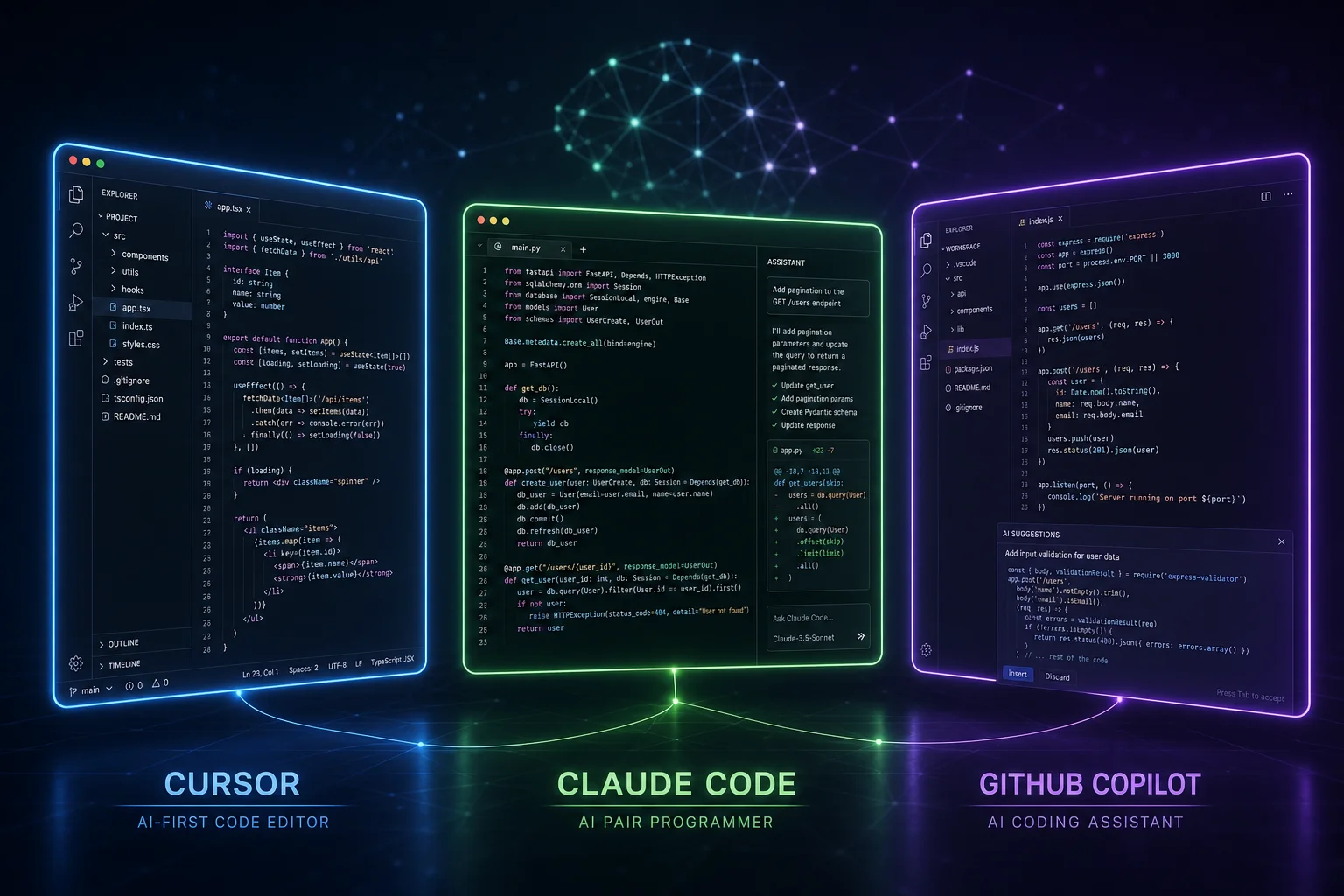
By January 2026, an average of 42% of all committed code is AI-generated or AI-assisted, driven by tools like Cursor which writes nearly a billion lines of accepted code daily 81. This shift introduces a new class of risks: hallucinated APIs, insecure defaults, nonsensical imports, plausible-looking but incorrect logic, and subtle vulnerabilities that feel correct to human reviewers but are deeply wrong. Traditional code review tools were not designed to catch these issues. The 2026 tool landscape has responded with a tiered, multi-layered ecosystem spanning AI-native pull request reviewers, static analysis with AI assistance, dedicated AI Code Assurance features, and LLM output validation frameworks.
---
1. The Leading Tools in Detail
1.1 CodeRabbit — AI-Native Pull Request Reviewer
What it is: CodeRabbit is an AI-first pull request reviewer that provides context-aware feedback, line-by-line code suggestions, and real-time chat on pull requests 7. It is not a static analysis tool — it is an AI-powered reviewer designed to replace or augment human PR review.
Unique capabilities:
- Provides instant, context-aware feedback on pull requests within minutes, often catching real issues that human reviewers miss 8(https://landing.coderabbit.ai/)
- Auto-generates PR summaries and walkthroughs that are especially helpful for large diffs touching generated files, tests, and configuration 30(https://androidexperto.com/how-coderabbit-brings-ai-to-code-reviews/)
- Operates across multiple surfaces: GitHub/GitLab/Bitbucket PRs, IDE extensions for VS Code, Cursor, and Windsurf, and a CLI tool that integrates with AI coding agents like Claude Code 29(https://marketplace.visualstudio.com/items) 10(https://www.coderabbit.ai/cli)
- Launched CodeRabbit Agent (May 2026) — described as a "second brain for engineering teams" that serves as a single agent for the entire software development lifecycle, integrating with Slack 14(https://markets.businessinsider.com/news/currencies/coderabbit-launches-slack-agent-a-second-brain-for-teams-1036150627)
- CodeRabbit Plan lets teams turn ideas into structured, context-rich coding plans integrated with issue trackers, reducing rework 15(https://www.coderabbit.ai/plan)
Pricing (May 2026): Free tier available; Pro at $24/user/month; Pro Plus at $48/user/month 12. Free 14-day trial for paid plans 13.
Best for: Teams that want to automate the human review process and catch logic errors, edge cases, and nonsensical AI-generated patterns before merging. Particularly strong on summarization and making large AI-generated diffs reviewable.
Limitations: CodeRabbit is not a true SAST (Static Application Security Testing) tool. It may miss deep vulnerabilities that require flow analysis or complex inter-procedural reasoning 11. It catches issues its AI model is trained to recognize but does not perform the kind of rigorous semantic analysis that tools like CodeQL provide.
---
1.2 Semgrep — Open-Source Static Analysis with AI Assistance
What it is: Semgrep is a fast, open-source static analysis tool that searches code, finds bugs, and enforces secure guardrails and coding standards. It supports 30+ languages and runs in CI/CD pipelines 2 3. Semgrep is built on pattern-based matching (not AI-driven triage), but it has added Semgrep Assistant for AI-powered prioritization and remediation.
AI-specific features (2026):
- Semgrep MCP (beta): Explicitly positioned as "The trusted security platform for AI generated code" 4(https://semgrep.ai/). This is a direct response to the surge in AI-generated code, providing a Model Context Protocol interface for AI coding agents to query Semgrep rules during code generation.
- Semgrep Assistant: An AI-powered AppSec engineer that helps both developers and AppSec teams prioritize, triage, and remediate findings at scale 32(https://pypi.org/project/semgrep/). This is especially important for AI-generated code, which can introduce large volumes of low-quality code that generates many false positives.
- Pattern-based detection: Because Semgrep uses user-defined and community-defined rules (rather than pure ML), it excels at catching specific known patterns common in AI-generated code — hallucinated APIs, insecure default configurations, and suspicious import chains — as long as those patterns are codified into rules 38(https://silentchain.ai/blog/ai-code-security-scanners-2026-codex-semgrep-alternatives/) 39(https://sanj.dev/post/ai-code-security-tools-comparison/).
Pricing: Community edition (free, open-source CLI); Team starting at $35/contributor/month or $22/developer/month depending on source; Enterprise with custom pricing 33 36.
Best for: Teams that want a fast, customizable, open-source SAST tool that they can extend with custom rules to catch AI-specific code patterns. Semgrep MCP is particularly relevant for teams using AI coding agents that need real-time safety feedback during generation.
Limitations: Pattern-based matching means it only catches what its rules define. AI-generated code can produce novel patterns that no rule yet covers. Semgrep Assistant helps with triage but does not fundamentally detect previously unseen vulnerability classes.
---
1.3 Snyk Code — AI-Powered Deep Code Analysis
What it is: Snyk Code is part of the Snyk AI Security Fabric, described as an AI-powered platform that secures custom-developed code, open-source dependencies, and cloud infrastructure 40. At its core is DeepCode AI, an AI code analyzer built for code security trained on 25M+ data flow cases across 19+ supported languages 41 42.
AI-specific features (2026):
- DeepCode AI: Uses multiple AI models to find, autofix, and prioritize vulnerabilities and manage tech debt. Unlike traditional static analysis, DeepCode AI was purpose-built using machine learning on millions of open-source codebases to understand data flow and detect vulnerabilities 41(https://snyk.io/platform/deepcode-ai/) 47(https://mostpopularaitools.com/tools/deepcode-snyk-ai).
- Automated fix suggestions: Provides AI-driven remediation suggestions across supported languages, reducing the time to fix AI-generated vulnerabilities 42(https://appsecsanta.com/snyk).
- Snyk AI Security Fabric: Launched in 2025-2026 as a "continuous, autonomous defense" for AI-generated code and AI-native applications 40(https://snyk.io/). Features include Code Agents that scan code continuously and autonomously.
- Claude integration: Snyk integrated Claude into its AI Security Platform to automate vulnerability detection, prioritization, and fixes 43(https://www.helpnetsecurity.com/2026/05/08/snyk-ai-security-platform/).
- Scalability: Serves over 2.5 million developers with customers including Twilio, Snowflake, Spotify. Reports 288% ROI and 80% faster scan times compared to prior tools 42(https://appsecsanta.com/snyk).
Pricing: Free tier for individual developers; Team plans starting at $25/developer/month; Enterprise with custom pricing 42 46.
Best for: Teams that want an AI-first approach to code security that can catch complex, data-flow-related vulnerabilities in AI-generated code — especially enterprises already in the Snyk ecosystem.
Limitations: Snyk Code is primarily a security tool, not a general code review tool. It is stronger at finding security vulnerabilities than at catching logic errors or functional bugs in AI-generated code. It requires CI/CD integration to be most effective and does not replace human review for architectural or design issues.
---
1.4 GitHub Copilot Code Review — Built into the Copilot Ecosystem
What it is: GitHub Copilot Code Review is a family of AI-powered review features built into the Copilot suite, available across github.com, VS Code, Visual Studio, JetBrains IDEs, the Copilot CLI, and GitHub Actions 51. It provides AI-generated PR summaries, code suggestions, and vulnerability detection on pull requests.
AI-specific features:
- Native GitHub integration: Runs as part of the pull request workflow on GitHub.com, providing AI reviews without needing a separate tool 51(https://refacto.ai/blog/github-copilot-code-review-in-2026-what-it-does-well-and-where-it-falls-short/).
- PR Summaries and Code Suggestions: Automatically summarizes changes and provides inline feedback on code quality and correctness.
- Trust and Safety Controls: VS Code provides agent sandboxing, tool approval, and security considerations for AI-assisted development 56(https://code.visualstudio.com/docs/copilot/concepts/trust-and-safety).
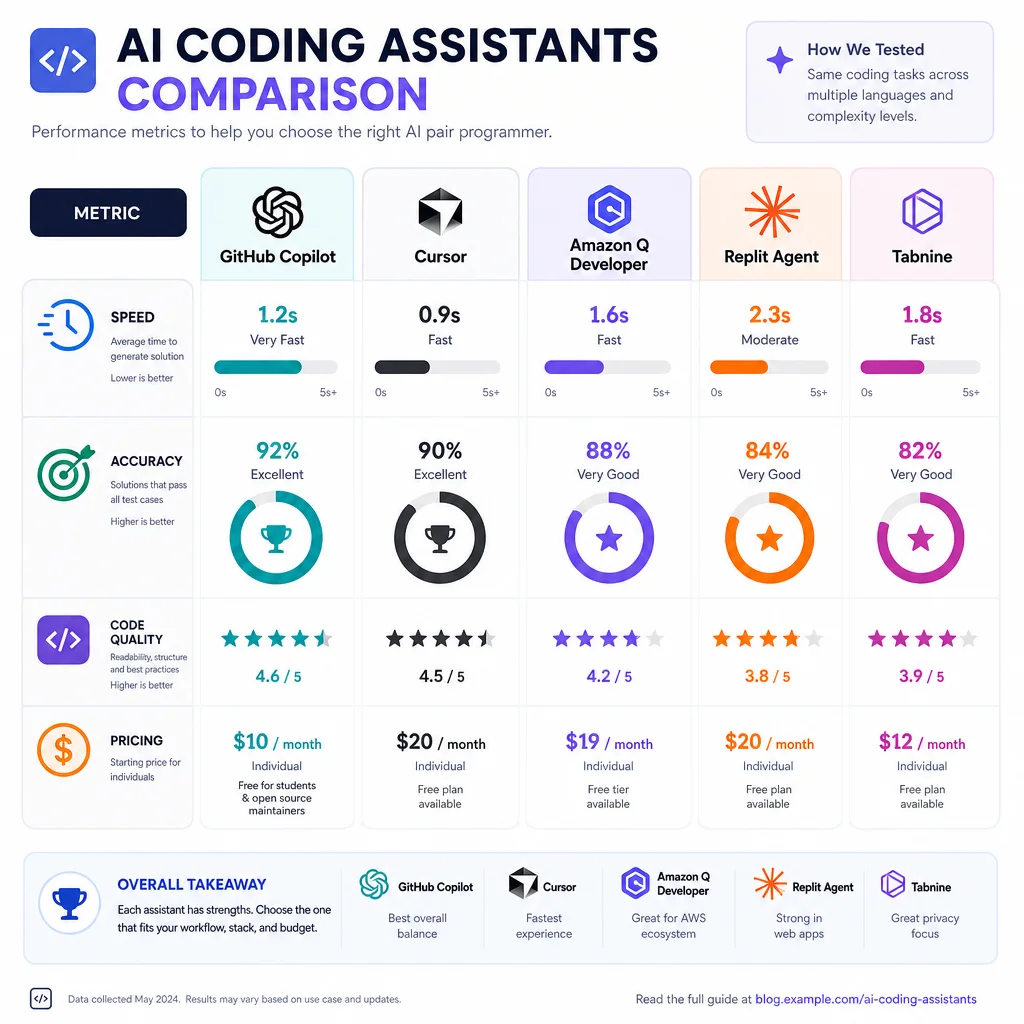
- Scale: Over 15 million users as of early 2025 53(https://www.secondtalent.com/resources/github-copilot-review/). Pricing at $10/month for Pro, $19/user/month for Business, Enterprise available 54(https://bitsfrombytes.com/github-copilot-review-2026-tested/).
Best for: Teams already deep in the GitHub ecosystem who want an easy, zero-configuration AI code review layer. Good for catching obvious issues and providing helpful summaries.
Limitations: Independent analyses show that dedicated review tools often catch more issues than Copilot's review features 51 57. Copilot Code Review is not a dedicated security scanner; it focuses on general code review rather than deep vulnerability detection. It struggles with complex inter-procedural vulnerabilities and does not have the rule customization that Semgrep or CodeQL offer.
---
1.5 CodeQL — Semantic Code Analysis Engine
What it is: CodeQL is an industry-leading semantic code analysis engine developed by GitHub that lets you query code as though it were data, allowing users to write queries to find all variants of a vulnerability across a codebase 68. It is the static analysis engine behind GitHub's code scanning feature in GitHub Advanced Security 69.
AI-specific features (2026):
- Semantic analysis: CodeQL understands the semantics of code, not just surface patterns. This makes it exceptionally good at catching subtle vulnerabilities in AI-generated code that pattern-based tools might miss — for example, authentication bypasses, injection flaws, and path traversal 68(https://codeql.github.com/) 70(https://codeql.github.com/docs/codeql-overview/supported-languages-and-frameworks/).
- AI-enhanced queries: GitHub is using AI to power vulnerability detection in CodeQL, and this combination of AI-generated models and variant analysis led to the discovery of CVE-2023-35947, a path traversal vulnerability in Gradle 72(https://github.blog/security/vulnerability-research/codeql-team-uses-ai-to-power-vulnerability-detection-in-code/).
- Variant analysis: Once a vulnerability is found, CodeQL can query the entire codebase for all variants, which is especially powerful when AI-generated code repeats the same flawed pattern across many files.
- Language support: C/C++, C#, Go, Java, JavaScript/TypeScript, Python, Ruby, Swift (Swift 6.3.1 supported in CodeQL 2.25.4) 70(https://codeql.github.com/docs/codeql-overview/supported-languages-and-frameworks/). The latest release also extends security analysis to Vercel serverless functions 71(https://github.blog/changelog/2026-05-12-codeql-2-25-4-adds-swift-6-3-1-support-improvements-to-c-and-java-and-more/).
Pricing: Bundled with GitHub Advanced Security, available to GitHub Enterprise customers. No standalone pricing 69.
Best for: Organizations that need the deepest possible security analysis of AI-generated code and have the expertise to write custom CodeQL queries. Particularly valuable for finding new, unknown vulnerability patterns in AI-generated code.
Limitations: Steep learning curve — writing CodeQL queries requires significant security expertise. Slower than pattern-based tools like Semgrep. Limited language support compared to Semgrep or SonarQube. Only available as part of GitHub Advanced Security (Enterprise).
---
1.6 SonarQube — AI Code Assurance with Dedicated Quality Gates
What it is: SonarQube is a code quality and security analysis platform used by over 7 million developers at organizations like Snowflake, Deutsche Bank, and Ford 78. It provides continuous inspection of code to identify bugs, vulnerabilities, code smells, and enforce coding standards 100 101.
AI-specific features (2026):
- AI Code Assurance: The most explicit AI-code-specific feature in the market. Teams can mark repositories as containing AI code and enforce quality gates that apply stricter rules to AI-generated code 84(https://docs.sonarsource.com/sonarqube-cloud/standards/ai-code-assurance/quality-gates-for-ai-code) 85(https://securityboulevard.com/2026/03/how-to-optimize-sonarqube-for-reviewing-ai-generated-code/) 86(https://open-2v.gitbook.com/url/docs.sonarsource.com/sonarqube-server/2025.1/instance-administration/analysis-functions/ai-code-assurance/quality-gates-for-ai-code). This allows organizations to impose different standards on code written by humans versus code generated by AI.
- AI CodeFix: Uses an LLM to automatically generate AI-driven code fixes for discovered issues. Now model-agnostic and works with multiple LLMs 82(https://www.sonarsource.com/solutions/ai/ai-codefix/) 83(https://open-2v.gitbook.com/url/docs.sonarsource.com/sonarqube-server/2025.1/instance-administration/ai-features/enable-ai-codefix) 78(https://appsecsanta.com/sonarqube).
- MCP Server: Integrates with Claude Code, Cursor, and Windsurf for real-time code quality feedback during AI code generation 78(https://appsecsanta.com/sonarqube).
- "Fight AI Slop" positioning: SonarQube explicitly markets its ability to verify AI code quality, addressing the specific challenge of low-quality AI-generated code entering production 79(https://www.sonarsource.com/products/sonarqube/).
- IDE plugins: Available for VS Code, Cursor, Windsurf, Eclipse, IntelliJ IDEA, and Visual Studio — bringing quality checks into the developer's environment 89(https://en.wikipedia.org/wiki/SonarQube).
Pricing: Community Edition (free, self-hosted); SonarQube Cloud free tier (50k lines, 5 users, PR analysis); Developer, Enterprise, Data Center editions available 78.
Best for: Organizations that want a comprehensive, enterprise-grade quality platform with explicit support for distinguishing AI-generated code from human code. The AI Code Assurance feature provides a clear governance framework for AI code.
Limitations: SonarQube is a quality platform, not specifically a security tool (though SonarQube Advanced Security adds SAST capabilities). Its strength is in enforcing coding standards and catching quality issues, but for deep security vulnerability analysis, tools like CodeQL or Semgrep may be stronger.
---
1.7 Guardrails AI — LLM Output Validation Framework
What it is: Guardrails AI is an open-source Python framework for validating LLM inputs and outputs. It uses composable validators from the Guardrails Hub to detect and mitigate risks including toxicity, PII leaks, hallucinations, and bias 58 59. It is fundamentally different from the other tools in this list — it does not scan source code. Instead, it validates the outputs of AI coding assistants at runtime before code enters the codebase.
AI-specific capabilities:
- Hallucination detection: Can validate LLM-generated code against schemas and constraints to catch hallucinated API calls, nonsensical imports, and structurally invalid code.
- Structured output validation: Pydantic-style validators for LLM outputs — forcing AI coding assistants to produce code that meets defined structural requirements 63(https://dev.to/agdex_ai/best-ai-agent-security-guardrails-tools-in-2026-llm-guard-vs-nemo-vs-guardrails-ai-5e5d).
- 50+ pre-built validators in the Guardrails Hub, configurable into Input and Output Guards 64(https://pypi.org/project/guardrails-ai/) 61(https://guardrailsai.com/hub).
- Streaming support with real-time validation 63(https://dev.to/agdex_ai/best-ai-agent-security-guardrails-tools-in-2026-llm-guard-vs-nemo-vs-guardrails-ai-5e5d).
- Open-source: 6.6k GitHub stars, 561 forks. Fully open-source with the core framework free 59(https://appsecsanta.com/guardrails-ai).
Pricing: Free tier available; paid tiers up to $500/month 62.
Best for: Teams building agentic coding workflows who need to validate LLM outputs in real-time before accepting generated code. Particularly useful as a gate between AI coding agents and the codebase.
Limitations: Guardrails AI validates LLM outputs — it cannot scan existing source code for vulnerabilities. It is a complement to, not a replacement for, static analysis and code review tools. It requires integration into the agentic workflow and configuration of appropriate validators.
---
2. Head-to-Head Comparisons and Benchmarks
2.1 How the Tools Differ Philosophically
The tools fall into three distinct categories:
2.2 Key Comparison Data (2025-2026)
CodeRabbit vs. GitHub Copilot Code Review vs. Semgrep vs. Snyk Code:
The Lorikeet Security blog tested these tools against real vulnerabilities from pentest engagements and found significant variation in what each catches 91. AI-native tools like CodeRabbit excel at catching obvious logic errors and providing helpful summaries but can miss deep security vulnerabilities. Dedicated SAST tools (Snyk Code, Semgrep) catch more security issues but may generate higher false positive rates with AI-generated code that deviates from expected patterns.
Semgrep vs. CodeQL:
An academic paper reviewed 1,080 LLM-generated code samples, built a human-validated ground-truth, and compared CodeQL and Semgrep outputs 77. The study found divergence in their detection capabilities — each tool caught issues the other missed. Semgrep's pattern-based approach catches surface-level issues quickly but misses complex inter-procedural vulnerabilities. CodeQL's semantic analysis catches deeper issues but requires more expertise to write effective queries and runs slower 75 76. The consensus: these tools are complementary, not substitutes.
Guardrails AI vs. NeMo Guardrails vs. LLM Guard:
A production LLM safety guide from 2026 compared these three guardrail frameworks with latency benchmarks and trade-offs between strict and permissive configurations 66. Guardrails AI offers the most extensive validator library (50+ pre-built validators) and the most flexible composition model, but the strictness of guardrails affects latency and can block legitimate code. The Guardrails Index benchmark compares 24 guardrails across 6 categories showing significant variation in performance 64.
2.3 Key Metrics for Evaluation
When evaluating tools for AI-generated code safety, the most important criteria are:
Effectiveness against AI-specific vulnerabilities:
- Hallucinated APIs: CodeRabbit and SonarQube's AI Code Assurance are strong here because they validate against known patterns. Guardrails AI can catch hallucinated APIs at the generation stage.
- Insecure defaults: Semgrep rules and CodeQL queries can codify patterns for insecure defaults. Snyk Code's DeepCode AI finds these through data flow analysis.
- Nonsensical logic: CodeRabbit excels here — its AI model can identify logic that looks correct but is semantically wrong.
- Repetitive flawed patterns: CodeQL's variant analysis is unique — find one instance, query for all.
False positive rates: Semgrep and CodeQL tend to have lower false positive rates for issues their rules are designed to catch because their rules are precise. AI-assisted tools like Snyk Code and AI CodeFix can introduce more false positives but also catch issues rule-based tools miss. Academic research on LLM-generated code shows that ground-truth validation is essential for accurate benchmarking 77.
Catch subtle AI bugs vs. traditional issues: AI-native tools (CodeRabbit, Copilot) are better at catching the unique patterns of AI-generated bugs — plausible-but-wrong code, hallucinated API calls, nonsensical dependencies. Traditional SAST tools (Semgrep, CodeQL) are better at catching well-known vulnerability classes (injection, XSS, path traversal) that exist in both human and AI code.
CI/CD integration: All major tools support CI/CD integration, but CodeRabbit and Copilot are easiest to deploy (GitHub-native). Semgrep and Snyk Code require more configuration. CodeQL requires GitHub Advanced Security.
---
3. Best Practices and Recommended Workflows
3.1 The Multi-Layered Safety Pipeline
The single most important finding from the 2025-2026 era is that no single tool is sufficient. The recommended approach is a defense-in-depth pipeline with validation at every stage:
Layer 1: IDE-Level Guards (Pre-Commit)
- SonarQube for IDE (or SonarLint) catches quality issues as code is being written 89(https://en.wikipedia.org/wiki/SonarQube)
- CodeRabbit IDE extension for VS Code, Cursor, and Windsurf provides real-time AI review on every commit before push 29(https://marketplace.visualstudio.com/items) 16(https://www.coderabbit.ai/ide)
- Semgrep local runs catch security issues before code leaves the developer's machine 3(https://github.com/semgrep/semgrep) 5(https://dev.to/rahulxsingh/how-to-set-up-semgrep-in-2026-complete-installation-and-configuration-guide-5emm)
Layer 2: Pre-Commit / Pre-Push Hooks
- CodeRabbit CLI integrates with AI coding agents like Claude Code to validate AI-generated code before it enters the repo 10(https://www.coderabbit.ai/cli)
- Guardrails AI as a gate between AI coding agents and the codebase, validating LLM outputs for structure and correctness 58(https://github.com/guardrails-ai/guardrails) 59(https://appsecsanta.com/guardrails-ai)
- Custom hooks running Semgrep or CodeQL against staged changes
Layer 3: Pull Request Review
- CodeRabbit or GitHub Copilot Code Review provides AI-powered PR summaries and line-by-line feedback 7(https://www.coderabbit.ai/) 51(https://refacto.ai/blog/github-copilot-code-review-in-2026-what-it-does-well-and-where-it-falls-short/)
- Semgrep CI, Snyk Code, or CodeQL run static analysis on the diff 2(https://semgrep.dev/) 3(https://github.com/semgrep/semgrep) 68(https://codeql.github.com/)
- SonarQube Quality Gates enforce standards before merging — with AI Code Assurance applying stricter rules to AI-flagged repositories 84(https://docs.sonarsource.com/sonarqube-cloud/standards/ai-code-assurance/quality-gates-for-ai-code) 85(https://securityboulevard.com/2026/03/how-to-optimize-sonarqube-for-reviewing-ai-generated-code/) 86(https://open-2v.gitbook.com/url/docs.sonarsource.com/sonarqube-server/2025.1/instance-administration/analysis-functions/ai-code-assurance/quality-gates-for-ai-code)
- Human review focuses on architectural decisions, design patterns, and issues the AI tools flag rather than reviewing every line
Layer 4: Post-Merge / CI/CD
- Automated testing (unit, integration, end-to-end) catches runtime issues that static analysis misses
- Semgrep full-codebase scans after merge to catch issues introduced across the codebase 3(https://github.com/semgrep/semgrep)
- Snyk AI Security Fabric provides continuous, autonomous scanning of AI-generated code 40(https://snyk.io/)
- CodeQL variant analysis to find all instances of a discovered vulnerability pattern 72(https://github.blog/security/vulnerability-research/codeql-team-uses-ai-to-power-vulnerability-detection-in-code/)
Layer 5: Production Monitoring
- Guardrails AI for production LLM applications, validating outputs of AI agents in production 58(https://github.com/guardrails-ai/guardrails)
- Runtime monitoring to detect anomalies introduced by AI-generated code that passed earlier checks
3.2 The Governance Framework
SonarQube's approach to AI Code Assurance — marking repositories as containing AI code and applying stricter quality gates — represents an emerging best practice 84 85 86. Organizations should:
1. Tag AI-generated code at the repository or file level
2. Apply different quality gates for AI code vs. human code (e.g., require zero critical issues for AI code vs. allowing some for human code)
3. Require human sign-off on any AI-generated code that modifies security-critical paths
4. Audit AI coding tool usage — track which tools generated what code for post-mortem analysis
3.3 Integrating with AI Coding Agents
The 2026 trend is toward closing the loop between AI coding agents and safety tooling:
- Semgrep MCP provides a Model Context Protocol interface that AI coding agents query during generation 4(https://semgrep.ai/)
- SonarQube MCP Server integrates with Claude Code, Cursor, and Windsurf for real-time feedback 78(https://appsecsanta.com/sonarqube)
- CodeRabbit Agent serves as a single agent for the entire software development lifecycle 14(https://markets.businessinsider.com/news/currencies/coderabbit-launches-slack-agent-a-second-brain-for-teams-1036150627)
- Guardrails AI validates agent outputs before they become code 58(https://github.com/guardrails-ai/guardrails)
This creates a real-time safety loop: the AI coding agent generates code, the safety tool evaluates it, and provides feedback to the agent, which can revise before the code is even committed.
---
4. Adoption Trends and Industry Landscape (2026)
4.1 The Scale of AI-Generated Code
The volume of AI-generated code has reached critical mass. By January 2026, an average of 42% of all committed code is AI-generated or AI-assisted 81. Cursor alone writes nearly a billion lines of accepted code daily 81. GitHub Copilot has over 15 million users 53. This volume makes manual review of every line impossible, driving adoption of automated safety tooling.
4.2 Key Industry Movements
Major tech companies:
- GitHub is integrating safety into the core platform — Copilot Code Review, CodeQL with AI-enhanced detection, and trust and safety controls in VS Code represent a platform-level approach to AI code safety 51(https://refacto.ai/blog/github-copilot-code-review-in-2026-what-it-does-well-and-where-it-falls-short/) 56(https://code.visualstudio.com/docs/copilot/concepts/trust-and-safety) 72(https://github.blog/security/vulnerability-research/codeql-team-uses-ai-to-power-vulnerability-detection-in-code/)
- Snyk is betting on AI-first security — the AI Security Fabric with autonomous Code Agents represents a vision of continuous, unattended security scanning for AI-generated code 40(https://snyk.io/)
- SonarSource has made the most explicit move toward AI code governance with AI Code Assurance and "Fight AI Slop" positioning, reflecting a view that AI code requires fundamentally different quality standards 79(https://www.sonarsource.com/products/sonarqube/) 84(https://docs.sonarsource.com/sonarqube-cloud/standards/ai-code-assurance/quality-gates-for-ai-code)
Open-source and community:
- Semgrep remains the dominant open-source SAST tool, with its MCP beta specifically targeting the AI code safety market 2(https://semgrep.dev/) 4(https://semgrep.ai/)
- Guardrails AI leads the LLM output validation space with 50+ pre-built validators and an open-source framework 59(https://appsecsanta.com/guardrails-ai)
- Academic research is building empirical foundations — the CodeQL vs. Semgrep study on 1,080 LLM-generated code samples 77(https://arxiv.org/html/2602.05868) is one of many emerging research efforts
4.3 Regulatory Pressure
The EU AI Act is the primary regulatory driver. High-risk obligations take effect on August 2, 2026, requiring organizations to implement risk management systems, technical documentation, transparency, human oversight, and accuracy/robustness for high-risk AI systems 97. While the EU AI Act primarily targets AI systems rather than code generated by them, its emphasis on robustness and accuracy is directly driving adoption of AI code safety tooling.
The market positioning reflects this: Semgrep MCP ("the trusted security platform for AI generated code") 4, SonarQube ("Fight AI Slop & Verify AI Code") 79, and Snyk ("continuous, autonomous defense for AI-generated code") 40 all reference the need for verification, trust, and governance that regulatory frameworks demand.
4.4 Emerging Standards and Frameworks
The OWASP Top 10 2025 was released in November 2025, marking the eighth installment with two new categories added 17 18. While OWASP does not yet have a dedicated AI-generated code standard, its Top 10 remains the primary reference for web application security risks that tools target.
The OWASP Top 10 for LLM Applications (updated in 2025) provides a framework for LLM-specific risks that Guardrails AI and similar tools address. The combination of traditional OWASP risks (injection, broken authentication) with LLM-specific risks (prompt injection, hallucination, insecure output handling) defines the threat model for AI-generated code safety.
---
5. Conclusion: Building an AI Code Safety Stack in 2026
There is no single "best" tool for AI production safety in 2026. The winning approach is a composed stack with four essential layers:
1. LLM Output Guardrails (Guardrails AI) at the generation layer — prevent bad code from being written
2. AI-Native Code Review (CodeRabbit or GitHub Copilot Code Review) at the PR layer — catch logic errors, provide context, make AI diffs reviewable
3. Deep Static Analysis (Semgrep, CodeQL, Snyk Code, or SonarQube) at the CI layer — catch security vulnerabilities that look correct but are deeply flawed
4. AI Code Governance (SonarQube AI Code Assurance) at the policy layer — enforce different standards for AI-generated vs. human code
The key insight for 2026 is that AI-generated code requires different safety approaches than human-written code. AI code tends to be syntactically correct but semantically wrong, uses hallucinated APIs, introduces insecure defaults, and repeats flawed patterns across large codebases. Traditional static analysis catches some of this, but AI-native review tools and guardrails are essential for the rest.
The best stack depends on your organization's risk profile, existing tool investments, and regulatory requirements. But the minimum viable approach for any team using AI coding tools in production is: an AI-native PR reviewer + a static analysis tool + a quality gate that distinguishes AI code from human code.