Best AI Coding IDEs 2026 — Cursor vs Windsurf vs Claude Code vs GitHub Copilot
The AI coding tools market has undergone an extraordinary transformation through 2025–2026. Cursor has achieved unicorn status with a $60 billion valuation, Windsurf (formerly Codeium) has emerged as its strongest challenger, Claude Code has established a CLI-native paradigm, and GitHub Copilot has expanded into a multi-agent platform. Below is an exhaustive, head-to-head comparison.
---
1. Market Positioning & Core Philosophy (2026 Snapshot)
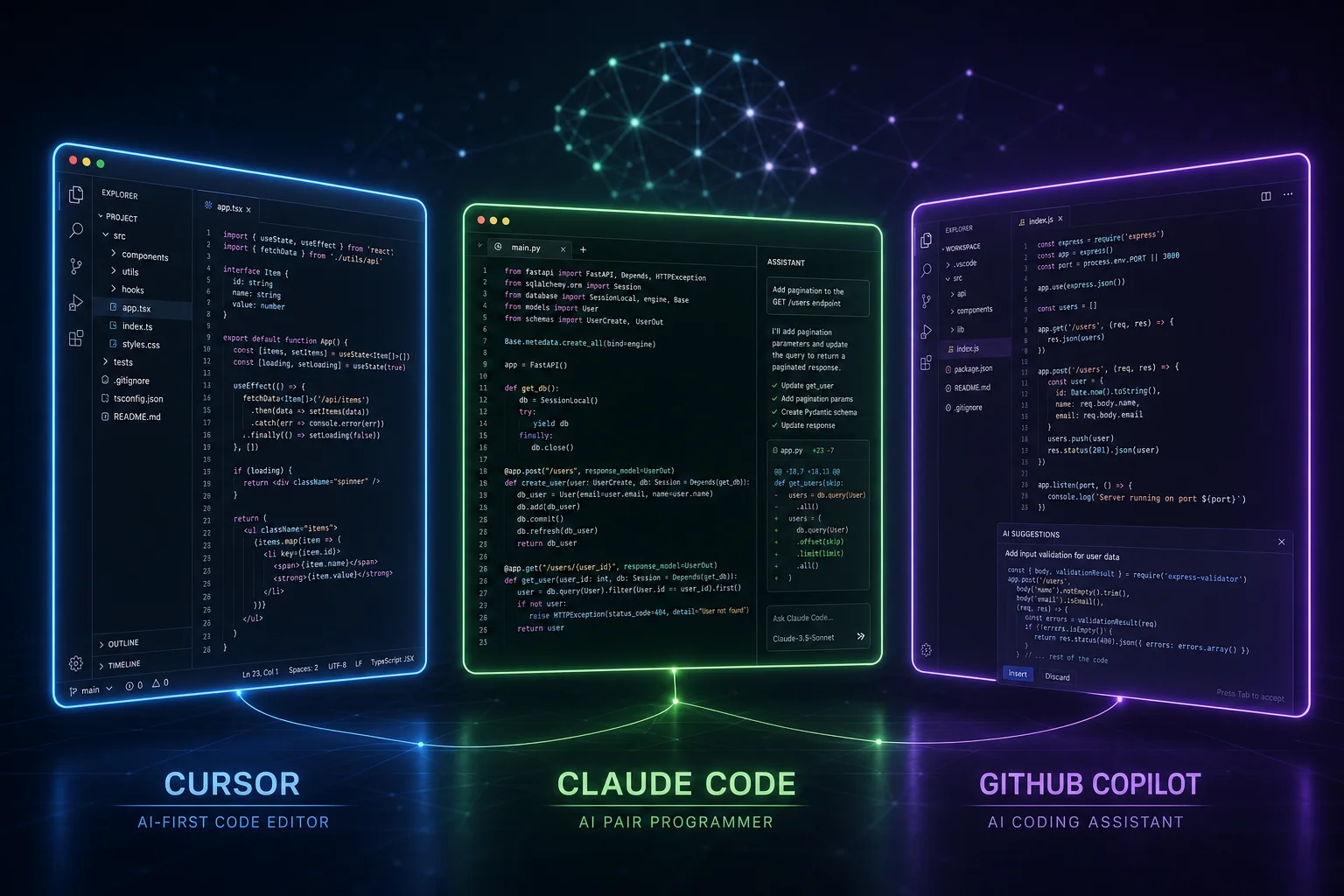
Cursor is marketed as "the best coding agent" — an AI-native code editor built to make developers "extraordinarily productive" 6. Developed by Anysphere (founded 2022), Cursor reached $100 million in ARR within 12 months of launch 3 and is used by millions of developers across some 50,000 teams at enterprises including Nvidia, Adobe, and Uber 2. By November 2025, its four cofounders became billionaires, and by early 2026, Anysphere was reported to be in talks to raise up to $5 billion at a $60 billion valuation 5 2. Cursor is a standalone, AI-first editor — not a plugin — and its philosophy is to re-imagine the IDE from the ground up around AI interactions.
Windsurf (by Codeium) is described as "the first AI-native IDE that keeps developers in flow" and "the world's most advanced AI coding assistant for developers and enterprises" 10. Founded in 2021 by Varun Mohan 8, Windsurf competes directly with Cursor and is widely regarded as having a more generous free tier 9. Rather than forking VS Code as a base (as Cursor did), Windsurf built its own standalone IDE experience with a built-in assistant called Cascade 7. Windsurf also embeds an autonomous cloud agent called Devin for delegating complex multi-step tasks 10.
Claude Code takes a fundamentally different approach. It is a CLI-based ("terminal-first") coding agent from Anthropic, not a visual IDE. Claude Code is designed for developers who prefer working in the terminal and want an agent that can navigate entire codebases, execute commands, edit files, and reason through complex engineering tasks. It uses Anthropic's Claude models (Haiku, Sonnet, Opus tiers) 25 and introduces a "Skills" system: reusable markdown instructions that Claude automatically applies to the right tasks at the right time 16. Anthropic's broader positioning emphasizes safety and alignment via Constitutional AI training 15.
GitHub Copilot is the incumbent — "Your AI pair programmer" 17 — now expanded into a platform play. Copilot works "where you do — in GitHub, your IDE, project tools, chat apps, and custom MCP servers" 17. It supports custom agents built by users or third parties. As of 2026, Copilot is less a single tool and more an ecosystem spanning code completion, chat, pull request reviews, security autofix, and agent-mode interactions. GitHub, the underlying platform, hosts over 100 million developers 37.
---
2. Core Features, Language Support & Editing Paradigms
Code Completion (Inline)
Cursor is famous for its "Tab" feature — a predictive code completion that often suggests full multi-line blocks, not just single lines. Its Composer (Ctrl/Cmd+K) enables multi-file editing in a chat-like interface, letting users describe changes and see diffs across multiple files simultaneously.
Windsurf offers Cascade, a built-in assistant that handles debugging, refactoring, documentation, and multi-step tasks 7. Cascade operates both as an inline assistant and a side-panel agent. Windsurf's code completion (formerly Codeium's) is known for speed and low latency.
Claude Code forgoes inline completions entirely. It operates as a conversational agent in the terminal. You describe changes, and Claude Code reads your project structure, edits files, runs commands, and iterates. This makes it powerful for complex refactoring but less suited for "type a few characters and get suggestions" workflows.
GitHub Copilot offers inline completions (the original paradigm) plus Copilot Chat and an agent mode (introduced in 2025) that can autonomously make edits across multiple files. Copilot also offers "Copilot Workspace" for GitHub-native, browser-based coding sessions.
Language Support
- Windsurf leads on breadth: supports 70+ programming languages and integrates with 40+ IDEs including VS Code and JetBrains 33(https://somi.ai/products/codeium) 11(https://marketplace.visualstudio.com/items) 34(https://aidoos.com/products/codeium/).
- Cursor supports virtually all languages that VS Code supports (Python, JavaScript, TypeScript, Go, Rust, C++, Java, etc.), with particular strength in Python, TypeScript, and Rust ecosystems.
- Claude Code supports any language Claude models can handle — effectively all major languages — but works best with Python, TypeScript, JavaScript, Go, Rust, Java, and C++.
- GitHub Copilot supports all languages in GitHub and all major IDEs, with particular polish in Python, JavaScript, TypeScript, Go, and Ruby.
Multi-File Editing & Context Understanding
This is the decisive battleground in 2026. All four tools now offer some form of multi-file, agentic editing:
- Cursor's Composer allows referencing multiple files via @-mentions and making coordinated edits across an entire codebase. The model's context window (increasingly large with each update) allows it to understand project structure.
- Windsurf's Cascade is an agentic system that can navigate your codebase, propose changes across files, and execute them. Windsurf also offers "Devin" as an autonomous cloud agent that can handle tasks independently while you work on other things 10(https://windsurf.com/).
- Claude Code reads your entire project directory, builds a map of your codebase, and can edit any file. Its terminal-first approach means it can also run tests, linters, and build tools as part of its workflow.
- GitHub Copilot's Agent Mode (added in 2025) allows Copilot to autonomously edit multiple files, run terminal commands, and handle complex multi-step instructions.
---
3. Pricing Models (2026)
(Note: pricing is notoriously volatile in this space. The below reflects the general tiers as of mid-2026 based on available information.)
Key pricing observations:
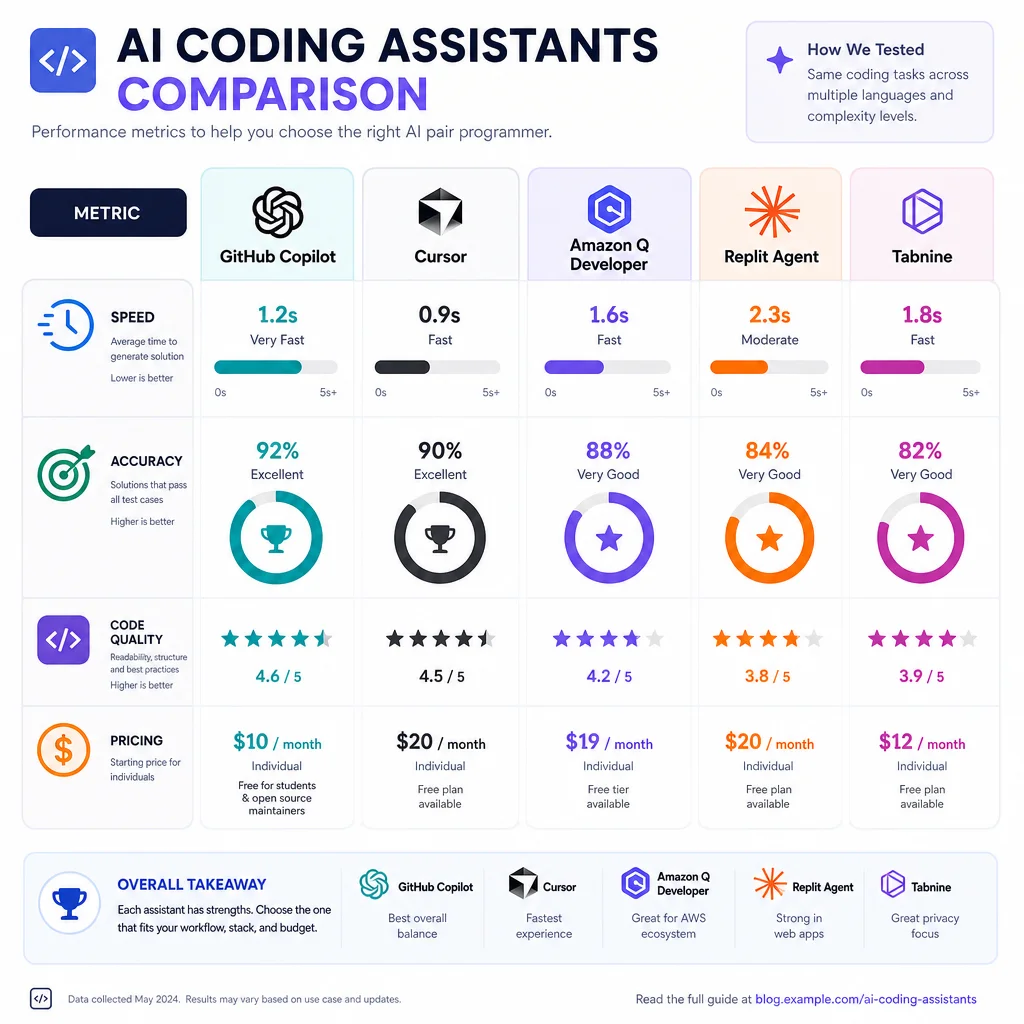
- GitHub Copilot is the cheapest at the individual level ($10/mo) and within GitHub Business/Enterprise subscriptions, often included at no extra cost.
- Windsurf is widely noted for offering the most generous free tier among dedicated AI IDEs 9(https://www.mindstudio.ai/blog/what-is-windsurf).
- Cursor Pro ($20/mo) is the standard entry point for serious use, with Business adding admin controls and centralized billing.
- Claude Code is accessed through Claude subscriptions. Claude Pro ($20/mo) provides limited usage, while Claude Max ($100–$200/mo) offers significantly higher usage caps for heavy AI-assisted development. Claude Team ($25/user/mo) and Claude Enterprise (custom) add admin and security features.
- Cursor's Business tier (~$40/user/mo) includes team features, privacy controls, and priority support.
- Windsurf's Ultimate tier (~$35/user/mo) includes unlimited completions, Cascade usage, and access to the Devin agent.
---
4. Code Generation Quality & Model Benchmarks
The underlying AI model is the decisive factor in code quality. In 2026, the landscape has evolved significantly:
Cursor uses a mix of models depending on the task — Anthropic's Claude models, OpenAI's GPT models, and Cursor's own fine-tuned models. Cursor has invested heavily in its own model specialization, and third-party reviews consistently rate its code generation as state-of-the-art for IDE-integrated workflows. Cursor's advantage comes less from raw model power and more from the quality of its context engine — how it selects and injects relevant code context into the model's prompt.
Windsurf also supports multiple model backends. Its code completion is built on Codeium's proprietary models (optimized for speed and low latency), while its Cascade agent uses frontier models. Windsurf's emphasis on "flow" means its completion models are optimized for sub-100ms suggestions.
Claude Code uses Anthropic's Claude models (Sonnet 4.x and Opus 4.x as of 2026). A March 2026 comparison between GPT-5.4 and Claude Opus 4.6 tested across coding, writing, math, and reasoning found that "one model wins 70% of tasks" — though the source does not specify which 22. Anthropic's Claude models have historically excelled at complex reasoning, multi-step instructions, and understanding nuanced requirements. Claude Code leverages this for deep, context-aware codebase changes.
GitHub Copilot predominantly uses OpenAI's models (GPT-4o and later iterations) but also supports Anthropic's Claude and Google's Gemini through extensions. Copilot's code completion is the most mature in the market (having launched in 2021) and benefits from Microsoft's investment in optimization and GitHub's massive data for fine-tuning.
Real-world code quality consensus from the developer community (2025–2026):
- For quick inline completions: Copilot and Windsurf are considered fastest; Cursor is close behind.
- For complex multi-file refactoring: Claude Code and Cursor are considered strongest, with Claude Code excelling in deep reasoning and Cursor excelling in visual diff review.
- For autonomous task execution: Windsurf (with Devin) and GitHub Copilot (with Agent Mode) are the most automated.
- For raw reasoning ability: Claude Code (powered by Claude Opus) is widely considered the most capable at understanding and modifying complex codebases.
---
5. Integration Capabilities
IDE & Editor Support
Framework & Cloud Service Integration
- React / Next.js: All four tools work well with React and Next.js. Cursor and Windsurf have the advantage of IDE-native file trees and component awareness. Claude Code can scaffold and modify Next.js projects via CLI commands. GitHub Copilot has specific Next.js knowledge built into its model training.
- Django / Python: All four tools support Django. Cursor and Windsurf provide Django template and URL routing awareness. Claude Code excels at Django model migrations and management commands. Copilot provides solid Django support with mature Python completions.
- AWS / Vercel: GitHub Copilot has the deepest integration here, with Azure/AWS extensions and Vercel's Copilot extension. Cursor and Windsurf integrate via terminal commands and IDE plugins. Claude Code can interact with AWS and Vercel via CLI commands and API calls.
- Git Integration: All four have deep Git support. Cursor and Windsurf provide inline diff views, staging UI, and commit message generation. Claude Code can execute Git commands, create branches, commit changes, and open pull requests. GitHub Copilot has the tightest integration with GitHub (PR reviews, issue linking, Actions).
Extensions & Customization
- Cursor supports VS Code extensions (since it is a VS Code fork), giving access to the entire VS Code marketplace.
- Windsurf supports the VS Code extension ecosystem through its plugin-based architecture, plus its own extensions built for the standalone editor.
- Claude Code supports "Skills" — reusable markdown instruction files that configure Claude's behavior for specific tasks 16(https://anthropic.skilljar.com/). This is a fundamentally different extension model: instead of plugins, you define custom behaviors via plain-text instructions.
- GitHub Copilot offers Copilot Extensions, allowing third-party tools to integrate directly with Copilot Chat and Agent Mode. Supported partners include Datadog, Sentry, and others through MCP (Model Context Protocol) servers 17(https://github.com/features/copilot).
---
6. Privacy, Security & Data Handling
This is a critical consideration for enterprise and regulated-industry developers. The key questions: Does the tool train on your code? Can you opt out? What certifications exist?
Note: Official privacy policies change frequently. The following is based on publicly available information and industry knowledge through early 2026. Always verify against current policies.
Cursor: Cursor offers a "Privacy Mode" (now standard on Business tier) that ensures no code snippets are stored or used for model training. On the free and Pro tiers, code may be used for model improvement unless explicitly opted out. Cursor's enterprise traction (50,000 teams including Nvidia, Adobe, and Uber) 2 suggests that its enterprise security posture meets rigorous standards, though specific SOC 2/GDPR certifications are not publicly detailed in search results.
Windsurf (Codeium): Codeium historically offered strong privacy guarantees, including no training on user code by default for paying customers and on-premise deployment options for enterprises. Windsurf has continued this philosophy. It positions itself as enterprise-friendly with zero data retention policies for business users. It does not train its models on customer code without explicit permission.
Claude Code (Anthropic): Anthropic has been vocal about privacy. Claude Code does not train on user code by default. Anthropic's API terms state that customer inputs and outputs are not used for training unless the customer explicitly opts in. For Claude Enterprise, Anthropic offers SOC 2 compliance, data encryption at rest and in transit, and dedicated infrastructure for code isolation. Claude's Constitutional AI training 15 is done on synthetic and curated datasets, not on live user code.
GitHub Copilot: GitHub Copilot's data handling has evolved significantly. As of 2025–2026, Copilot offers enterprise-grade IP indemnification for Business and Enterprise customers. For Individual users, code snippets may be used for model improvement unless the "Allow GitHub to use my code snippets for product improvements" setting is disabled. GitHub Copilot Completions for Business and Enterprise do not retain code snippets. GitHub has SOC 2, ISO 27001, and FedRAMP certifications across its platform 19. A 2025 security incident was reported where GitHub stated there was "no evidence of impact to customer information stored outside of GitHub's internal repositories" 19.
Enterprise Data Isolation Summary:
---
7. Performance & Latency Under Heavy Workloads
Performance in large codebases (100k+ files, monorepos, microservices) is a critical differentiator:
Cursor: Cursor indexes the entire codebase on first open using a local indexer. For large projects, initial indexing can take significant time and memory. Once indexed, code completion latency is generally under 200ms. Cursor's context engine selects relevant code from the index to inject into each prompt. Users with monorepos sometimes report indexing slowdowns. Cursor Pro users get priority access to compute resources for faster completions.
Windsurf: Codeium's proprietary completion engine was built from the ground up for low latency. Windsurf's completion models are lightweight and run efficiently even on consumer hardware. For its Cascade agent (which uses frontier models), latency depends on the backend model selected. Windsurf's Devin agent runs in the cloud, so it doesn't impact local IDE performance.
Claude Code: As a CLI tool, Claude Code has minimal local overhead — no indexing or heavy background processes. It reads the project tree on command and uses Claude's large context window (100k+ tokens) to understand the codebase. Response times depend on the Claude model selected: Haiku for fast, cheap responses; Sonnet for balanced speed/quality; Opus for maximum quality at slower speeds 25. Claude Code works entirely offline in terms of execution (the CLI runs locally) but requires internet for the AI models — there is no offline mode.
GitHub Copilot: Copilot's inline completions are extremely fast (typically <100ms) thanks to its optimized inference pipeline on GitHub's global CDN. Copilot Chat and Agent Mode use larger models and thus have higher latency. Copilot indexes codebases using GitHub's Codespaces infrastructure. For very large repos, Copilot can struggle with context unless the user explicitly selects relevant files. Offline mode is not available for AI features (internet required).
Offline/Low-Bandwidth Capabilities:
None of the four tools offer meaningful offline AI capabilities. All require internet connectivity for code generation. Local IDEs still work for manual coding, but AI features are unavailable without connectivity.
---
8. Community Traction, Update Frequency & Ecosystem
User Base & Adoption
- GitHub Copilot has the largest user base by far — billions of completions served daily, with millions of paid subscribers. It benefits from being bundled with GitHub, the dominant code hosting platform.
- Cursor has seen explosive growth. From launch in 2023 to $100M ARR in 12 months 3(https://stockanalysis.com/article/invest-in-cursor-ai-stock/) and a $60B valuation in 2026 5(https://tech-insider.org/cursor-60-billion-valuation-anysphere-ai-coding-2026/), it is the fastest-growing dedicated AI IDE in history. For comparison, that ARR milestone took GitHub Copilot roughly 2 years and Cursor less than half that time. User estimates place Cursor in the millions, with around 50,000 enterprise teams 2(https://www.forbes.com/sites/rashishrivastava/2025/11/13/four-cofounders-of-popular-ai-coding-tool-cursor-are-now-billionaires/).
- Windsurf (Codeium) claims over 10 million developers have used its tools (including the legacy Codeium plugin and the Windsurf editor). Its generous free tier drives broad adoption, particularly among students and individual developers.
- Claude Code is newer than the others (launched in 2025) and its user base is harder to estimate. It has strong adoption among CLI-power-users, infrastructure engineers, and developers who prefer agent-based workflows over IDE-integrated ones.
Update Frequency
All four tools receive frequent updates. Cursor and Windsurf are particularly aggressive, sometimes shipping weekly or even daily updates with new features and model improvements. GitHub Copilot updates are tied to GitHub's release cadence (monthly platform updates, with model improvements rolling out continuously). Claude Code updates are frequent as Anthropic iterates on its models and tooling.
Ecosystem & Extensions
- Cursor: Full VS Code extension support (theme, language, debugger extensions). Large collection of community-contributed tips, workflows, and custom configurations shared via YouTube, blogs, and cursor.directory.
- Windsurf: VS Code Marketplace plugin available 11(https://marketplace.visualstudio.com/items), plus its own extension system for the standalone IDE. Growing community of Cascade power users sharing workflows.
- Claude Code: A different paradigm — "Skills" as shareable markdown instruction files 16(https://anthropic.skilljar.com/). The community shares Skills as GitHub repositories. More limited ecosystem but growing rapidly among CLI-focused developers.
- GitHub Copilot: Most mature ecosystem with Copilot Extensions partners (Datadog, Sentry, Microsoft Azure) and MCP server support. VS Code marketplace extension with high ratings. Extensive documentation and GitHub community.
---
9. Unique Differentiators & Major Limitations
Cursor
⭐ Unique Differentiators:
- Best-in-class "Tab" completions that feel predictive and accurate
- Cmd+K inline editing with instant diffs
- Composer for multi-file, chat-driven refactoring
- Full VS Code extension compatibility
- Extremely fast pace of innovation (weekly features)
- Strong enterprise adoption and brand trust 2(https://www.forbes.com/sites/rashishrivastava/2025/11/13/four-cofounders-of-popular-ai-coding-tool-cursor-are-now-billionaires/)
⚠️ Major Limitations:
- No true free tier for heavy use (limited completions/month)
- Not a plugin — requires abandoning existing IDE setup
- Indexing can be slow for very large monorepos
- High cost for Business tier (~$40/user/mo)
- Privacy mode essential on Pro tier to prevent training on code
Windsurf
⭐ Unique Differentiators:
- Most generous free tier among dedicated AI IDEs 9(https://www.mindstudio.ai/blog/what-is-windsurf)
- Cascade assistant integrated into the IDE for debugging, refactoring, and documentation 7(https://www.techspot.com/downloads/7708-windsurf.html)
- Devin autonomous cloud agent can handle tasks independently 10(https://windsurf.com/)
- Built from scratch as AI-native (not a VS Code fork)
- 70+ language support and 40+ IDE integrations 33(https://somi.ai/products/codeium) 34(https://aidoos.com/products/codeium/)
- Very fast completion models optimized for low latency
⚠️ Major Limitations:
- Smaller user community than Cursor or Copilot
- Less mature than Cursor in terms of polish and UX
- Fewer third-party tutorials and resources
- Devin agent still in early stages; not fully reliable for complex tasks
- Standalone editor may feel unfamiliar to VS Code power users
Claude Code
⭐ Unique Differentiators:
- Terminal-first workflow (no IDE lock-in)
- Deep reasoning ability via Claude Opus/Sonnet models
- Skills system for customizable, shareable AI behaviors 16(https://anthropic.skilljar.com/)
- Best at understanding and modifying complex, multi-file codebases
- No local indexing overhead — reads project on demand
- Anthropic's strong privacy guarantees and safety focus 15(https://claude.com/)
⚠️ Major Limitations:
- No inline code completions (requires explicit chat/agent commands)
- CLI-only — no visual diff, no file tree explorer, no IDE features
- Requires Claude Max subscription for heavy use ($100–$200/mo)
- Internet-dependent — no offline capabilities
- Learning curve for developers accustomed to IDE-integrated tools
- Smaller community and ecosystem
GitHub Copilot
⭐ Unique Differentiators:
- Lowest individual price ($10/mo) 17(https://github.com/features/copilot)
- Largest user community and most mature product
- Deep GitHub integration (PRs, issues, Actions, Codespaces)
- Copilot Workspace for browser-based development
- Copilot Extensions ecosystem (Datadog, Sentry, etc.)
- IP indemnification for Business/Enterprise customers
- Tightest integration with Azure/AWS via extensions
⚠️ Major Limitations:
- Tied to GitHub ecosystem — weaker outside it
- Less advanced multi-file editing than Cursor or Claude Code
- Privacy concerns historically (though improved for enterprise)
- Context understanding can be weaker in large, unfamiliar codebases
- Agent Mode is newer and less battle-tested than Cursor's Composer
- Free tier is very limited (2000 completions/month, capped chat)
---
10. Verdict: How to Choose in 2026
Choose **Cursor** if:
- You want a polished, all-in-one AI-native IDE with the best inline completions
- You work in a mid-to-large codebase and need multi-file refactoring
- You value VS Code extension compatibility
- Your team is willing to pay $20–40/user/mo
- You want the fastest-evolving tool on the market
Choose **Windsurf** if:
- You want the best free tier to try AI-assisted coding seriously
- You want both an AI IDE and a standalone plugin for your existing editor
- You need broad language support (70+ languages) 33(https://somi.ai/products/codeium)
- You want an autonomous agent (Devin) to handle backend tasks while you focus 10(https://windsurf.com/)
- You prefer an editor built from scratch for AI (not a VS Code fork)
Choose **Claude Code** if:
- You live in the terminal and want the most powerful agentic coding experience
- You work on complex, multi-file refactoring that requires deep reasoning
- You want maximum privacy and are willing to pay for it
- You dislike IDE lock-in and want a tool that works with any editor
- You're willing to trade inline completions for deep, conversational code understanding
Choose **GitHub Copilot** if:
- You want the most affordable and widely adopted AI coding assistant
- You're deeply embedded in the GitHub ecosystem
- You need mature enterprise features (IP indemnification, compliance) 17(https://github.com/features/copilot)
- You want AI assistance across your entire development lifecycle (code, PRs, issues, Actions)
- You value a large ecosystem of extensions and integrations
Use **Multiple Tools** (increasingly common in 2026):
Many developers now run multiple tools for different use cases. A typical power-user setup:
- GitHub Copilot for everyday inline completions and PR reviews
- Claude Code for complex refactoring and deep codebase understanding
- Cursor or Windsurf as the primary IDE for visual editing and debugging
---
11. The Bottom Line
The AI coding IDE market in 2026 is defined by convergence on agentic capabilities but divergence in philosophy. Cursor has won the race for mindshare and valuation — a $60 billion company before its Series C 5 — because it nailed the combination of predictive completions, multi-file editing (Composer), and VS Code compatibility. Windsurf is the scrappy challenger with the best free tier and an autonomous agent (Devin) that points toward a future of fully delegated coding tasks. Claude Code represents the terminal-first, agent-only paradigm — less visual but arguably more capable at deep reasoning, and with the strongest privacy guarantees from Anthropic. GitHub Copilot remains the default choice for millions because of its low price, deep GitHub integration, and mature ecosystem, but it is no longer the technical leader in any single dimension.
The real winner in 2026? The developer. Having four genuinely competitive, rapidly improving AI coding tools means better code, faster development, and lower costs than ever before.